
Most brands check out at checkout: 8 ways to increase post-purchase engagement

Contents
- What is post-purchase customer engagement?
- Why post-purchase engagement matters for e-commerce brands?
- The post-purchase journey: what customers need and when
- How to increase post-purchase engagement: 8 strategies
- How to measure post-purchase engagement
- Common mistakes that weaken post-purchase engagement
- Turn useful interactions into lasting customer relationships
- FAQs
Looking to improve your post-purchase experience to increase engagement?
Your customer’s interest in your brand doesn’t end at checkout. They still want to know when their order will arrive, and how you handle their questions or problems can determine whether they’ll buy from you again. Once their order arrives, relevant recommendations and loyalty offers can encourage customers to shop again.
Consider what happens when a customer places an order and hears nothing for days. They check their inbox, visit the carrier’s website and eventually contact support. Meanwhile, your next email offers 15% off another purchase.
You’re communicating, but you’re missing the opportunity to build a better customer relationship.
In Forrester’s 2025 consumer survey, 80% of respondents said an order confirmation with a specific delivery or pickup date was important to them.
That’s a good place to start: give customers the information they need while they wait, then find useful ways to stay in touch after delivery. Below, we’ll explore eight ways to do that, with real post-purchase engagement examples and metrics to show what’s working.
What is post-purchase customer engagement?
Post-purchase engagement refers to how customers interact with your brand after checkout, from checking order progress and using self-service options to leaving reviews, joining loyalty programs or buying again. Retailers can encourage these interactions through helpful communications, relevant offers and a positive customer experience.
It’s part of the broader post-purchase experience, which includes everything customers go through after buying, including delivery and returns. It’s also closely related to post-purchase marketing, which uses activities such as personalized offers and loyalty program invitations to encourage repeat business.
Customer engagement is all about how customers respond: checking tracking information, answering a survey, choosing an exchange or returning to your store. For the most successful brands, the goal is never just a transaction—it’s to keep customers satisfied and give them more reasons to buy again, driving repeat purchases and increasing customer lifetime value.
Why post-purchase engagement matters for e-commerce brands?
After an online purchase, customers want reassurance that their order is progressing and that they’ll get what they paid for. Uncertainty can lead to repeated tracking checks, questions for your support team or second thoughts about the purchase. These are common post-purchase behaviors; how easily customers find the answers they need can influence their satisfaction during the post-purchase phase.
Clear post-purchase communications help you meet those expectations. For example, a branded tracking page lets customers check delivery progress directly on your website, without visiting a carrier’s site or contacting support. Combined with proactive delivery updates, this can reduce avoidable WISMO (“where is my order?”) inquiries and the associated customer support costs.
A positive post-purchase customer experience can also encourage customers to buy from you again, increasing retention and customer lifetime value. Poor experiences have the opposite effect: NRF’s 2025 returns research found that 71% of consumers are less likely to shop with a retailer again after a bad returns experience. Keeping existing customers coming back also reduces reliance on high customer acquisition costs and supports more sustainable growth through customer loyalty rather than solely through new customer acquisition.
The post-purchase journey: what customers need and when
Customers interact with your brand in different ways throughout the post-purchase customer journey. Someone waiting for a parcel may repeatedly check its progress, while someone who’s happy with their purchase might leave a review or explore other products.
Understanding these behaviors helps you identify opportunities to improve customer satisfaction and encourage future purchases. Here’s how you can support engagement at each stage and measure the results.
| Stage | What customers do | How to encourage engagement | Metric to track |
|---|---|---|---|
| After checkout | Check order details and delivery expectations | Give easy access to their order summary and estimated delivery date | Order status visits |
| Fulfillment | Check whether their order is progressing | Make order progress easy to follow without contacting support | Tracking visits, WISMO rate |
| In transit | Follow delivery progress, sometimes across several parcels | Provide one branded tracking page showing the entire order | Tracking page engagement |
| Delay or exception | Look for answers or request assistance | Make updated order information and support options easy to access | WISMO rate, CSAT |
| Delivery | Confirm receipt or report a problem | Offer quick access to delivery details and assistance | Delivery CSAT |
| Product use | Explore product guidance or related items | Provide helpful content and relevant product recommendations | Content engagement, recommendation clicks |
| Return or exchange | Request a return, choose an exchange or check refund progress | Offer convenient self-service options and alternatives to refunds | Self-service completion, exchange rate |
| Retention | Leave reviews, join loyalty programs or buy again | Offer relevant rewards, referral incentives and personalized offers | Review submissions, loyalty enrollment, repeat purchase rate |
The key is to make each interaction worthwhile for your customers. When they can find answers, resolve problems and discover useful offers through your brand, you have more opportunities to earn their next purchase.
How to increase post-purchase engagement: 8 strategies
Next, put the post-purchase strategy into practice. These eight tips will keep shoppers informed after checkout, encourage meaningful interactions and provide a positive post-purchase experience that supports repeat revenue.
1. Start post-purchase operations with clear delivery expectations
Customers should know when to expect their order in the pre-purchase phase and have an easy way to follow its progress afterward. Show a realistic delivery estimate on product and checkout pages, then give shoppers a clear call to action, such as Track your order, after they’ve purchased.
With parcelLab, a post-purchase experience platform that helps retailers manage delivery tracking, customer communication and returns, you can use machine learning to predict delivery dates before checkout. The platform also lets you compare those estimates with actual delivery times, helping you set more reliable customer expectations.
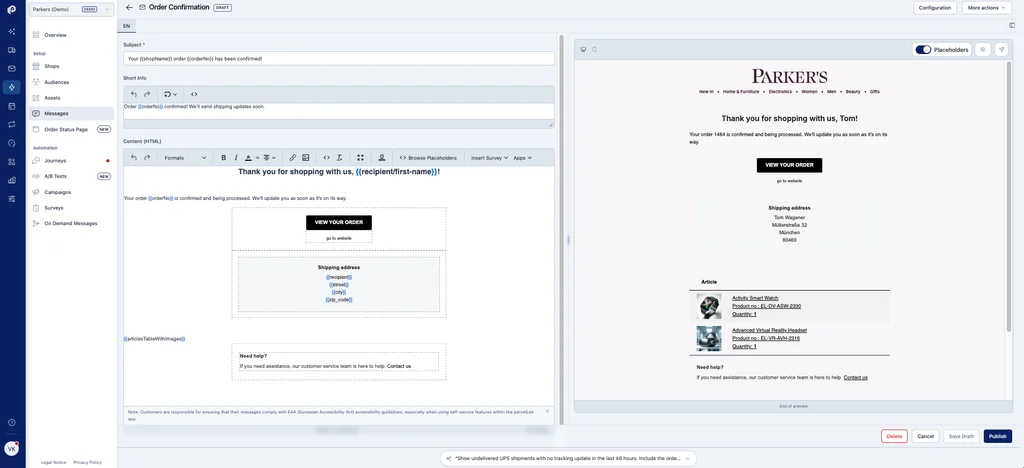
After checkout, parcelLab helps you keep customers informed through automated shipping updates, including proactive notifications when a delivery is delayed or its estimated arrival date changes.
When customers know what to expect and where to check their order, they’re less likely to contact support unnecessarily.
2. Keep customers engaged when delivery plans change
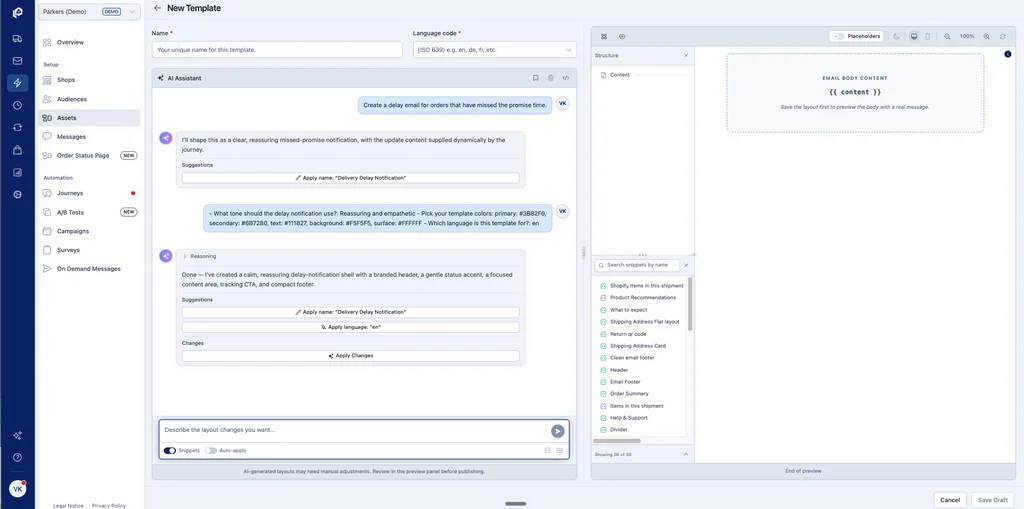
A delayed delivery doesn’t have to result in a frustrated customer. What matters is whether shoppers can easily find out what’s happening with timely reminders, shipping updates, etc., and get help when they need it.
With parcelLab, eCommerce brands can identify shipments at risk of arriving late and proactively inform affected customers. This gives them a clearer idea of what to expect and reduces the need to repeatedly check tracking information or contact support.
For practical guidance on notification timing, message content and communication channels, see our post-purchase communication guide.
3. Keep order tracking on your own website
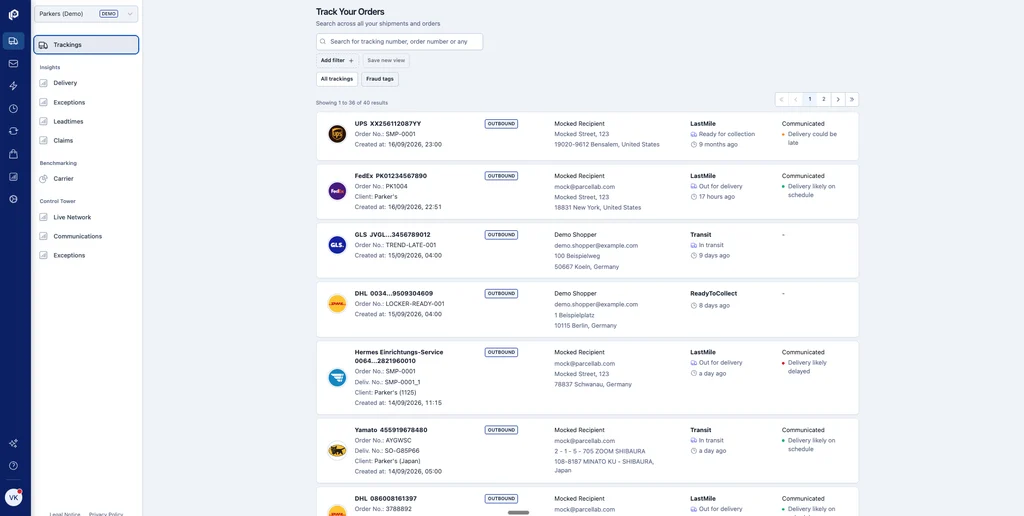
Carrier tracking pages typically show the progress of individual parcels, leaving customers to figure out which items are arriving when, especially if their order is split across several shipments. A branded tracking page brings all that information together in one place on your website, making it easier for customers to find answers without contacting support. It also keeps them connected to your brand, where you can share relevant product recommendations and encourage future purchases.
With parcelLab, you can create branded tracking pages on your own domain that display order-level delivery information, even when multiple carriers or shipments are involved. Combined with proactive notifications, this can help reduce unnecessary support requests.
One of our clients, smart home brand Wyze, used parcelLab to improve communication about split shipments and delivery progress, resulting in 20% fewer WISMO inquiries.
4. Personalize messages using real customer context
Good personalization should reflect purchase history, customer data and order status, not just the first name. The goal is to make every message more relevant, not to send more.
For example, a first-time customer might appreciate an introduction to your support options, while a repeat buyer could be interested in loyalty points or exclusive perks. But if either customer has a delayed order, resolving that issue should take priority over promotional messages.
parcelLab helps you tailor post-purchase communications based on customer segments, order information and delivery status. You can also send localized notifications in different languages, which is particularly useful if you sell across several markets.
For example, Berlin Brands Group used parcelLab to communicate shipping updates in 12 languages and reported 24% fewer customer service requests.
5. Share useful content after delivery
After customers receive their orders, they may still need help, e.g., setting up a product, caring for it, getting the most out of their purchase, or returning it.
Use this opportunity to share useful information and show you care. For example, send setup instructions for electronics or washing advice for clothing. Helpful guidance can also prevent returns caused by customers not knowing how to use a product correctly.
Send these messages after delivery confirmation, when customers can actually use the advice. For products that need regular replacement, you can follow up later with a replenishment reminder.
With parcelLab, you can automatically send product-specific content after delivery, including links to relevant resources on your website. Give each message a clear call to action, such as View your setup guide, so customers know where to find the help they need.
6. Ask for customer feedback at the right time
Customers can only give useful feedback once they’ve experienced the full process. Request delivery feedback shortly after the parcel arrives, but give shoppers enough time to use a product before asking for a review.
For example, someone buying a T-shirt may be ready to leave a post-purchase evaluation within a few days, while a mattress buyer might need several weeks. Make it easy for customers to respond, and pay attention to negative feedback. When someone reports a problem, give them a clear way to contact support and resolve it before sending another promotional message.
With parcelLab, you can automatically send feedback requests based on delivery events, helping you reach customers at a more appropriate point in their journey.
Retailer Hessnatur reported 365% growth in product reviews after introducing parcelLab’s automated review requests.
7. Make returns and exchanges easy to manage
A return doesn’t necessarily mean you’ve lost a customer. How you handle the experience can influence whether they feel comfortable buying from your eCommerce store again.
Your return policy should be easy to understand. Customers need to know which items are eligible, how to request a return, and when to expect a refund or exchange. Ideally, they should be able to handle it without contacting support.
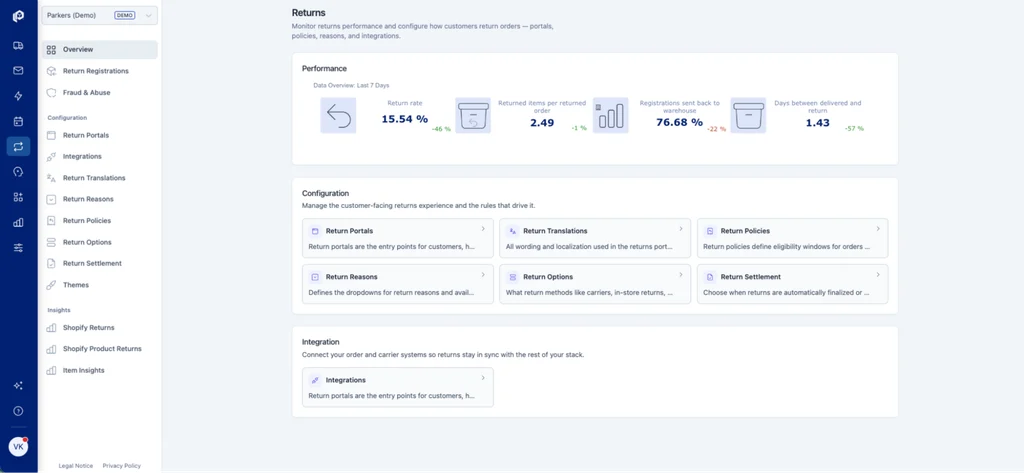
With parcelLab’s self-service returns portal, customers can register returns online and follow their progress. You can also offer exchanges or store credit as alternatives to refunds, giving shoppers more ways to find a satisfactory resolution while helping you retain revenue.
parcelLab also lets you adjust return policies based on the product, customer history or assessed risk. For example, you can allow eligible customers to complete standard returns automatically while routing higher-risk requests for manual review, subject to your policies and applicable law.
Keeping customers informed throughout the return process can also reduce “where is my return?” inquiries and help maintain their confidence in your store.
8. Give customers a reason to make repeat purchases
Once the initial purchase goes well, you can encourage customers to return with post-purchase upselling strategies.
Give customers a reason to buy again with relevant and enticing offers. For example, a coffee machine buyer might appreciate an exclusive discount on a curated coffee-tasting set. At the same time, a skincare customer could receive a complimentary sample with their next replenishment order. You can also reward loyal customers with early access to new collections or offer store credit to both the customer and a friend they refer.
With parcelLab, you can include personalized product recommendations and promotional content in post-purchase emails and branded tracking pages. This lets you introduce relevant offers while customers are already interacting with your brand.
Fashion brand True Classic reported 29% higher revenue per email after improving its post-purchase communications and product recommendations with parcelLab. Book a demo to see what results you can achieve.
How to measure post-purchase engagement
Getting customers to interact with your post-purchase messages is a good start, but you also need to know whether those interactions lead to better business results. Are customers contacting support less often? Are they joining your loyalty program or returning to make another purchase?
The following metrics will help you evaluate customer engagement and its impact on retention and revenue.
| Metric | What it tells you |
|---|---|
| Email or SMS click rate | Whether customers act on your messages; open rates can be less reliable due to privacy features |
| Branded tracking visits | How frequently shoppers check their orders |
| Review and survey completion | Whether customers respond to feedback requests |
| WISMO contacts per 1,000 orders | Whether customers still need help finding delivery information |
| Post-delivery support contacts | Whether shoppers still need help after receiving an order |
| Repeat purchase rate | Share of customers who buy again in a specific period |
| Customer retention rate | Share of customers who remain active over a period of time |
| Time to repeat sales | How quickly first-time buyers become repeat buyers |
| Customer lifetime value | Longer-term customer value, beyond a single campaign |
| Post-purchase revenue | Sales attributable to relevant messages, tracking pages or retained exchanges |
| Loyalty program enrollment rate | Percentage of eligible customers who join your loyalty program after purchasing |
| Loyalty member repeat purchase rate | Percentage of loyal customers who make another purchase within a defined period |
When measuring post-purchase engagement, look beyond individual metrics. A higher email click rate may indicate that customers find your messages useful, but it doesn’t necessarily mean they’re more loyal. Compare similar customer groups over time to see whether engagement leads to repeat purchases and higher customer lifetime value.
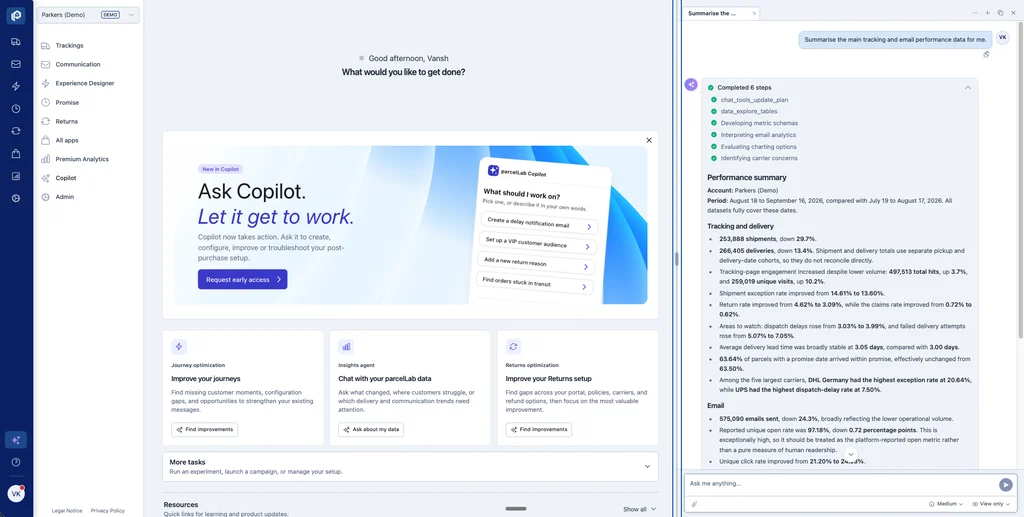
To understand what’s happening behind the numbers, you can use parcelLab Copilot, an AI assistant that lets you ask questions about your live post-purchase data in plain language. For example, you can ask which delivery emails have the lowest click rates, which carriers are causing the most delays or why returns have increased in a particular market.
Copilot can investigate these issues, recommend improvements and even help prepare changes to your post-purchase communications for your approval. This makes it easier to act on your findings instead of spending time comparing reports manually.
Common mistakes that weaken post-purchase engagement
Even a well-planned post-purchase strategy can frustrate customers if your messages arrive at the wrong time or ignore their current situation. Here are five mistakes to avoid:
- Sending promotions at the wrong time. Pause upsells and promotional emails when a customer has an unresolved delivery or return issue. Address their problem first.
- Treating every customer the same. Tailor messages to purchase history, customer loyalty and order status.
- Staying silent when something goes wrong. Notify customers about delays or failed delivery attempts before they contact support. Explain what’s happening and when they can expect another update, even if you don’t have a resolution yet.
- Focusing on clicks instead of results. High email engagement means little if customers aren’t buying again. Track repeat purchases, customer retention and support inquiries alongside clicks.
- Keeping marketing and operations disconnected. Use up-to-date delivery and return information to coordinate your communications. Otherwise, you risk sending promotional offers to customers who are still waiting for a missing parcel or refund.
Turn useful interactions into lasting customer relationships
Every interaction after checkout is an opportunity to earn a customer’s next purchase. Start by setting an accurate delivery estimate, keeping shoppers informed when plans change and making returns easy. Once their order arrives, follow up with helpful content and offers that give them a reason to shop again.
With parcelLab, you can put this strategy into practice at scale. Predict delivery dates, automate personalized shipping updates and keep customers engaged through branded tracking pages. Let shoppers manage returns and exchanges themselves, while using post-purchase data to spot issues and improve the customer experience.
The result? Fewer avoidable support requests, more opportunities to retain revenue and a better chance of turning first-time buyers into loyal customers.
Book a parcelLab demo to see how you can reduce post-purchase costs and turn new clients into repeat customers.
FAQs
Keep customers informed at every stage of the customer journey with timely shipping updates and branded order tracking. After delivery, offer helpful product advice, request feedback and make returns easy. Personalized recommendations and loyalty rewards encourage repeat purchases.
Clear communication and hassle-free returns improve customer satisfaction and trust, making shoppers more likely to buy again. Relevant follow-up offers can bring customers back for a second purchase, helping turn first-time buyers into repeat customers.
Request delivery feedback shortly after the order arrives, but wait until customers have used the product before asking for a review. A few days may be enough for clothing, while products like electronics or cosmetics may require several weeks.
Post-purchase engagement includes all customer interactions after checkout, from tracking orders to requesting returns and leaving reviews. Post-purchase marketing focuses on encouraging future purchases through personalized offers, loyalty programs and other promotional campaigns.
Send messages based on meaningful events, such as dispatch, delivery or a return update. Tailor their frequency and content to customer preferences, avoid unnecessary messages and pause promotions when an order or return issue remains unresolved.
Liked this Post? View more related posts below


