


Post-purchase behavior: Your path to higher customer lifetime value

Contents
- What is post-purchase behavior?
- What are the five stages of post-purchase consumer behavior?
- Common post-purchase behavior examples and what they tell you
- What influences post-purchase behavior?
- How to improve post-purchase behavior with better customer experiences
- How to measure post-purchase behavior
- Use customer behavior trends to your advantage
- FAQs
What customers do after checkout can affect whether they buy from you again. In Qualtrics’ 2025 consumer research, 53% of consumers said they would reduce spending after a bad experience.
But customers don’t always tell you what’s wrong. They might repeatedly check their tracking, return an item or simply never buy again. Recognizing these behaviors and understanding what drives them can help you address problems before they cost you repeat customers.
This article helps you make sense of consumer behavior so you can turn typical habits to your advantage and boost customer retention.
What is post-purchase behavior?
Post-purchase behavior is what a customer thinks, feels and does after buying a product or service. It includes checking delivery progress, evaluating the product, contacting support, returning it, writing a review and deciding whether to buy again.
It doesn’t necessarily end when the parcel arrives or the return window closes. Someone might recommend your brand months later or choose a competitor for their next purchase.
Post-purchase behavior vs. post-purchase experience
This distinction separates the customer’s actions from how you interact with them throughout the post-purchase journey. You can visualize it with these examples:
- Post-purchase behavior: The shopper checks their order, complains about a delay or buys again.
- Post-purchase experience: The retailer’s delivery messages, tracking page, packaging, support, marketing and returns process that the shopper encounters.
You can’t dictate how customers respond, but you can improve the experience that influences their decisions.
Pre-purchase vs post-purchase behavior
| Criteria | Pre-purchase behavior | Post-purchase behavior |
|---|---|---|
| When | Before checkout | After checkout and beyond delivery |
| Typical actions | Research, compare and read reviews | Track, use, return, review and repurchase |
| Main question | “Should I buy?” | “Was this the right choice, and would I buy again?” |
| Business focus | Win new customers | Retain customers and build advocacy |
These behaviors happen both online and in physical stores. E-commerce includes an additional period between payment and possession, when delivery promises, carrier updates and tracking information can strongly influence how shoppers feel.
What are the five stages of post-purchase consumer behavior?
Customers don’t all follow the same path, but these five stages help organize the most typical behaviors:
- Confirmation and immediate reaction. The customer gets an order confirmation and may feel excitement, relief or doubt. They check the items, payment and estimated delivery date. An unclear confirmation can prompt a support question or an attempt to cancel.
- Waiting and order tracking. While an order is in transit, customers check shipping status and delivery dates. Unclear updates can lead to WISMO (“where is my order?”) inquiries, while useful messages keep shoppers informed. In Scurri’s 2025 research, 82% of respondents said they’d be more forgiving of delivery issues if notified in advance.
- Delivery and product evaluation. Customers finally get to see and touch the delivered product and compare it with the description, photos and expectations. Does it fit? Is anything missing or damaged? This starts the post-purchase evaluation, which may continue as they use the product.
- Response. Depending on that evaluation, the shopper keeps the item, asks a question, requests an exchange, returns it or leaves a review. These aren’t always clear signs of satisfaction or dissatisfaction. Someone exchanging shoes for a different size may still be happy with your brand.
- Loyalty, advocacy or exit. Over time, the customer buys again, recommends you to someone else or shops elsewhere. A repeat order can signal trust, although price, product need and competing deals also affect the decision.
For a more detailed view of the touchpoints themselves, see our guide to the post-purchase customer journey.
Common post-purchase behavior examples and what they tell you
Individual actions can be misleading. Look for patterns across orders, customer groups and delivery outcomes before drawing conclusions.
| Behavior | What you observe | What it might mean | Metric to watch |
|---|---|---|---|
| Repeated tracking | Several tracking visits for one order | Interest, uncertainty or an unclear ETA | Tracking visits per order |
| WISMO inquiry | Customer asks where the parcel is | Missing or confusing delivery information | WISMO contacts per 100 orders |
| Return or exchange | Item returned with a selected reason | Size, quality or expectation mismatch | Return rate by reason and product |
| Post-purchase dissonance | Early cancellation or questions about the choice | Purchase doubt, even without a defect | Early cancellations; feedback themes |
| Review | Positive or negative product feedback | How the item and experience were perceived | Review rate; recurring themes |
| Survey response | Shopper rates delivery or support | Satisfaction among respondents | CSAT; response rate |
| Message engagement | Clicks on delivery updates or tracking links | Information was relevant enough to open | Click rate; tracking page visits |
| Repeat purchase | Customer places another order | Continued demand and willingness to return | Repeat purchase rate |
| Referral or advocacy | Referral used or recommendation shared | Willingness to recommend the brand | Referral rate; NPS |
| Inactivity | No further purchase or response | Possible churn, or simply no need to reorder yet | Time since last order |
One caution: the absence of a complaint doesn’t mean satisfaction. Qualtrics research found that consumers have become less inclined to tell brands about both good and bad experiences. For a full picture, analyze both what customers say and what they do.
What influences post-purchase behavior?
These factors explain many of the reactions you see after checkout:
- Expectations versus reality. A delivery promise, product description or size chart sets a standard. If the item arrives later than expected or doesn’t match its listing, customers may complain, request a refund or give a lower rating.
- Delivery communication. Waiting without a clear update creates uncertainty. Messages that acknowledge delays and offer clear answers may prevent avoidable support contacts. But spammy updates can also be frustrating.
- Product education and support. Someone struggling to assemble furniture may need a video introduction or setup PDF, not a refund. Accessible instructions and support can resolve problems before they become returns.
- Returns and service recovery. Even a disappointing product can lead to another purchase if the exchange or refund is handled fairly. Convenience matters when shoppers already feel let down. The NRF’s 2025 research found that 71% of consumers were less likely to shop again after a poor returns experience.
- Post-purchase dissonance. This is doubt or regret about the buying decision, sometimes called buyer’s remorse. The psychology is: someone might like a jacket but wonder whether it was worth the price. Sending styling or care tips can help them get more value from their purchase, while clear return deadlines and instructions reassure them that they have options if they change their mind.
The same customer behavior can have different causes, so investigate the root cause before making changes. If multiple customers repeatedly return one jacket size because it’s too small, you may need to correct the size guide. But if returns are high across an entire collection, review return reasons and purchasing patterns to understand what’s happening.
How to improve post-purchase behavior with better customer experiences
Understanding why customers behave a certain way helps you decide what to improve. That might mean providing clearer tracking information, notifying shoppers about delays earlier or making exchanges easier to request.
The challenge is making those improvements consistently across every order. Different carriers provide different tracking updates, and customer service and returns teams may work with separate information. This is where a post-purchase experience platform can help.
parcelLab is one such tool. It helps ecommerce merchants manage what happens after checkout, from branded order tracking and proactive delivery updates to self-service returns. By connecting order, carrier and returns data, you can keep shoppers informed and give them ways to resolve common issues without contacting support.
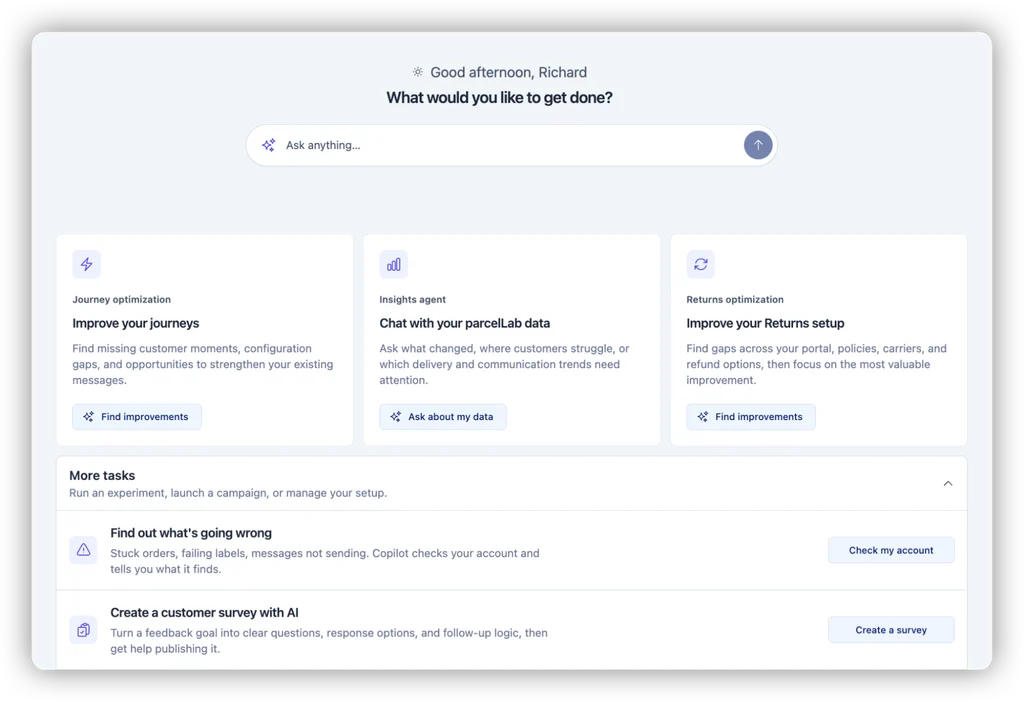
Here are six ways to put this into practice using parcelLab tools:
- Identify where customers get stuck. Use parcelLab’s tracking and communication reports to see how customers interact with your Order Status Page and delivery updates. Compare these insights with delivery exceptions and WISMO inquiries to find recurring problems. For example, if customers frequently ask about orders stuck at “label created,” you can use parcelLab’s Messages & Journeys to send an update explaining the status and when to expect further information. Then monitor whether support inquiries decrease.
- Set expectations before uncertainty grows. Give shoppers a realistic delivery date, repeat it in the order confirmation and if the estimate changes, explain why. With parcelLab Promise, you can display machine learning-based delivery estimates on product pages and at checkout. After purchase, parcelLab’s Engage module lets you configure Messages & Journeys for relevant order events. Don’t send messages merely because a new carrier scan arrived; only send information the customer can use.
- Make the whole order easy to track. Someone who bought three items doesn’t want to open three unrelated carrier links to understand when everything will arrive. parcelLab’s branded Order Status Page can show order-level progress, including split shipments, on your own domain. The carrier integrations map different carrier statuses into a more consistent view. If customers still have questions, your support team can use parcelLab’s Customer Service tools to check shipment progress and delivery exceptions, then provide answers based on the latest available tracking information.
- Communicate about delays before customers ask. A simple “delayed” notification leaves customers wondering when their order will arrive. Explain what’s changed, share an updated delivery estimate when available and tell them when to expect more information. parcelLab’s Trending Late feature uses machine learning to identify shipments likely to arrive late, so you can send proactive delivery updates through Messages & Journeys before customers contact support.
- Treat returns as another chance to help. Let customers choose the item they want to return, explain the reason and see the available options. In parcelLab’s self-service returns portal, you can offer an eligible exchange or store credit instead of a refund to retain revenue. You can also customize return rules by market, item or customer risk based on their past behavior.
- Use feedback and data to improve. With parcelLab, you can analyze delivery performance, customer survey responses, communication engagement and return reasons. Copilot also lets you ask questions about your data, such as which carriers have the most delays or which products are returned most often. Use these findings to improve your post-purchase marketing, for example by sending helpful product instructions or timing feedback requests better. You can also increase post-purchase engagement through more relevant follow-ups and personalize post-purchase upselling based on what customers bought and how they responded.
A good example of how retailers can use post-purchase data to improve customer behavior comes from Farfetch, an online marketplace for luxury fashion. They used parcelLab to bring tracking updates from multiple carriers into one branded experience and communicate delivery issues more clearly. When the team noticed an increase in failed deliveries in Australia, they added messages encouraging customers to reschedule. 79% of shoppers returned to Farfetch’s website through tracking, while delivery-related support contacts dropped by 30–40%. This shows how retailers can use delivery data to identify problems and help customers before they contact support.
How to measure post-purchase behavior
| Metric | What to look for |
|---|---|
| Repeat purchase rate | Share of customers in a defined cohort who order again within a specific period |
| Time to second purchase | Time between first and second orders for customers who return |
| Return or exchange rate by reason | Categories and products with recurring issues |
| WISMO contacts per order | Delivery questions relative to order volume |
| Tracking visits per order | Frequency of tracking checks, alongside delivery exceptions |
| Review rate and themes | What customers mention, not just average stars |
| Customer satisfaction (CSAT) | Satisfaction with a specific delivery, return or service interaction |
| Net Promoter Score (NPS) | Stated likelihood to recommend |
| Customer effort score (CES) | How hard customers say it was to resolve a problem |
Segment results by carrier, country or product type to determine which process to change.
Don’t use any one metric as proof of cause. Tracking visits may stay high because customers like checking progress, even when WISMO falls. A rise in exchanges could mean your alternative to refunds is working, not that the product has become worse.
Use customer behavior trends to your advantage
Post-purchase behavior helps you identify where customers lose confidence and what might prevent them from buying again. Look beyond individual actions, find recurring problems and address their causes. Then measure whether your changes reduce support inquiries and improve customer retention.
See how parcelLab can help you put this into practice. From branded tracking for split shipments to proactive delay notifications and personalized return options, you can manage the interactions that influence your customers’ next purchase.
Book a parcelLab demo to explore these capabilities and see how they could work with your existing delivery and returns processes.
FAQs
It helps you understand whether customers are satisfied, confused, likely to return or at risk of leaving. Tracking inquiries, return reasons, and repeat orders can reveal problems that sales figures alone won’t show.
Post-purchase dissonance is doubt or regret after buying something. A customer may wonder whether they chose the right item or paid the right price even when the product is satisfactory.
Pre-purchase behavior includes researching products and deciding to buy (or not). Post-purchase behavior covers what customers think and do afterward, from tracking and product use to reviews, returns and future orders.
Repeat purchases and recommendations are positive signs. Complaints and brand switching may signal problems. But a return or a high tracking frequency isn’t automatically negative; the reason and context matter.
Set accurate expectations, explain delivery changes promptly, make order tracking straightforward and give customers clear return options. Then use support contacts, customer feedback and repeat purchase data to find out which changes are helping. Loyalty programs, discounts and recognition for frequent buyers are also great strategies to implement to influence consumer behavior positively.
Liked this Post? View more related posts below


