Returns management solutions don’t just decide how much revenue you keep from sales. According to Katherine Cullen at the National Retail Federation, they’re “an additional touchpoint for retailers to provide a positive interaction with their customers.”
The scale is huge. The National Retail Federation estimated that retailers would receive $849.9 billion in returns in 2025, equal to 15.8% of annual sales. And customers remember a poor process. In the same research, 71% said they would be less likely to shop with a retailer again after a bad returns experience.
The right returns management software helps you convert returns into revenue without disrupting customer loyalty. You can apply different rules by product or market, then offer an exchange or store credit when it makes sense. Fraud controls flag suspicious requests. Collecting data on return reasons helps you spot recurring product issues, like when one clothing size keeps coming back far more often than others.
This guide compares 11 options based on product depth and business needs, helping you narrow the list to what fits you best.
What is returns management software?
Returns management software handles a return from start to finish. Customers submit requests through a self-service portal, where the platform checks whether each item meets your return policy. If approved, it provides return instructions and tracks the item on its journey.
More advanced platforms can also issue refunds, arrange exchanges and update your inventory, streamlining reverse logistics. For example, your warehouse can send an undamaged item straight back into stock.
What returns management solutions handle
Returns software connects the customer experience with your warehouse and support teams. The main benefit is reducing manual work during reverse logistics while maintaining customer satisfaction. It can:
Check each request against the return window and policy for that order.
Create a return record (RMA) with a shipping label or QR code.
Issue a refund or replacement. Some platforms can also offer exchanges and store credit, which helps you retain revenue.
Track the parcel and send updates so customers don’t have to contact support about delayed refunds or package arrivals.
Inform the warehouse how to handle each item, then update the order and inventory management records.
Show actionable insights on which products come back most often and why.
Every step uses the same return record. This means your team spends less time copying information between systems or correcting mistakes. Customers get clearer choices and faster updates. You see where delays and avoidable costs block you from full operational efficiency.
Who needs returns management software?
Consider dedicated software for returns management processes if:
Your support team consistently wastes time on copying return and order details between systems.
Too many returns end in refunds. You rarely offer an exchange or store credit instead.
Customers contact you because they can’t see their return status or expected refund date.
International returns cost too much because parcels take inefficient routes.
Your in-store and online return rules don’t match.
You suspect return abuse but lack enough data to decide which requests need review.
If you run a very small ecommerce business, a clear policy and an organized support queue may be enough. Track returns during a normal month and your busiest sales period. Then calculate how much staff time they take.
Dedicated software makes sense once that manual work piles up and costs real money over time.
How we evaluated these platforms
We evaluated each vendor using the same five areas covered in the profiles below:
Primary use case. We identified the type of retailer each platform suits and the returns problem it helps the team handle.
Customer return experience. We reviewed how customers start a return and which return methods they can use. We also checked the available refund alternatives, including exchanges or store credit.
Policy and risk controls. We examined eligibility rules and return fees. We also reviewed controls for suspicious requests or repeated return abuse.
Returns operations. We looked at return labels and status updates. We also considered warehouse processing or international routing where relevant. Integrations and reporting appear when they affect the platform’s main use case.
Customer feedback. We recorded the G2 rating available for each vendor in September 2026. We then used recent reviews to identify practical limitations.
The 11 best returns management solutions of 2026
1. parcelLab: best for enterprise retailers that need policy-level control over returns
parcelLab is a post-purchase experience and returns management platform for enterprise and upper-mid-market retailers that need precise policy control across multiple markets or sales channels.
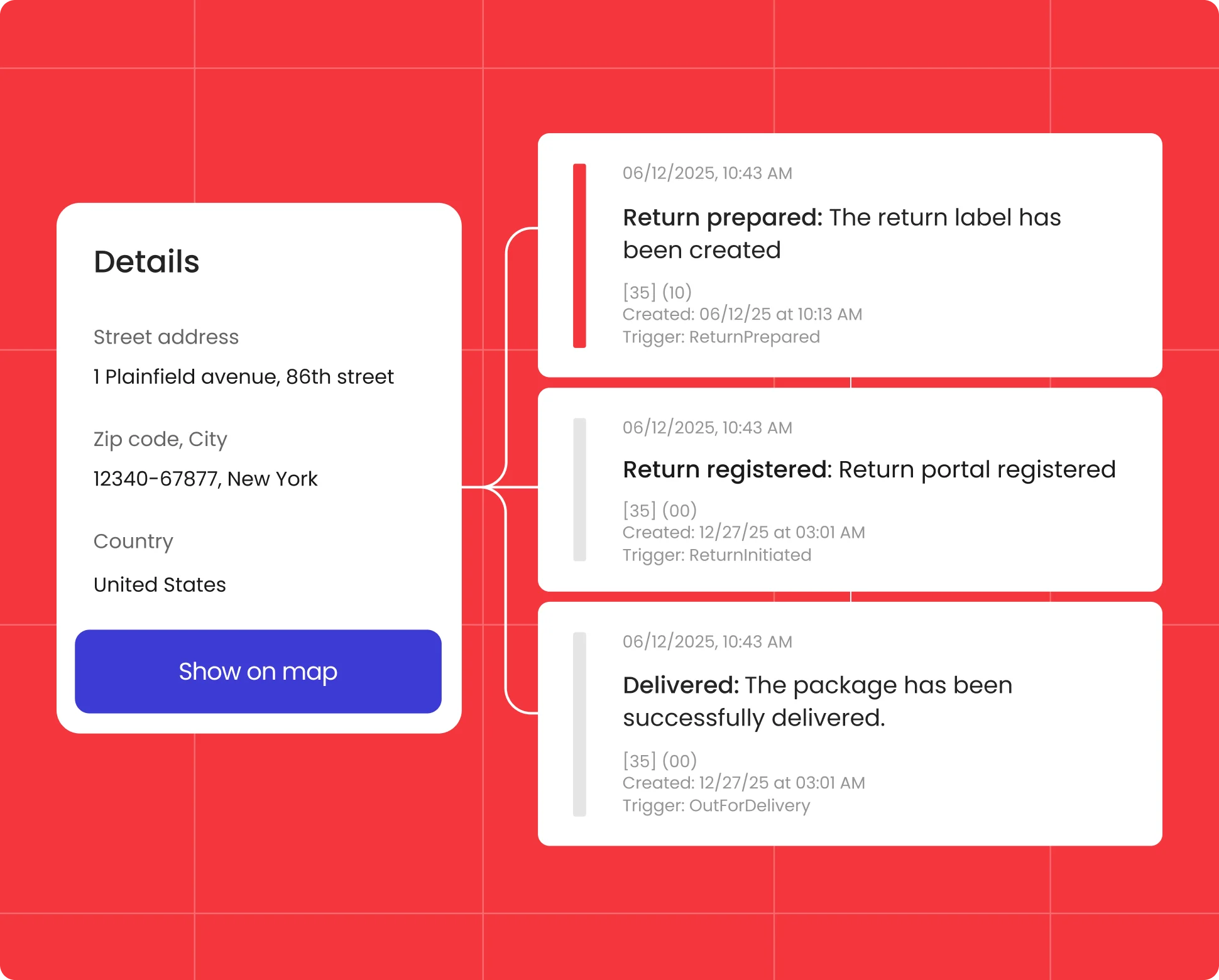
Your CX and ops teams can give customers a branded self-service return portal and apply the right policy to each request. Set return windows or fees based on customer risk, or offer an exchange or store credit before issuing a refund.
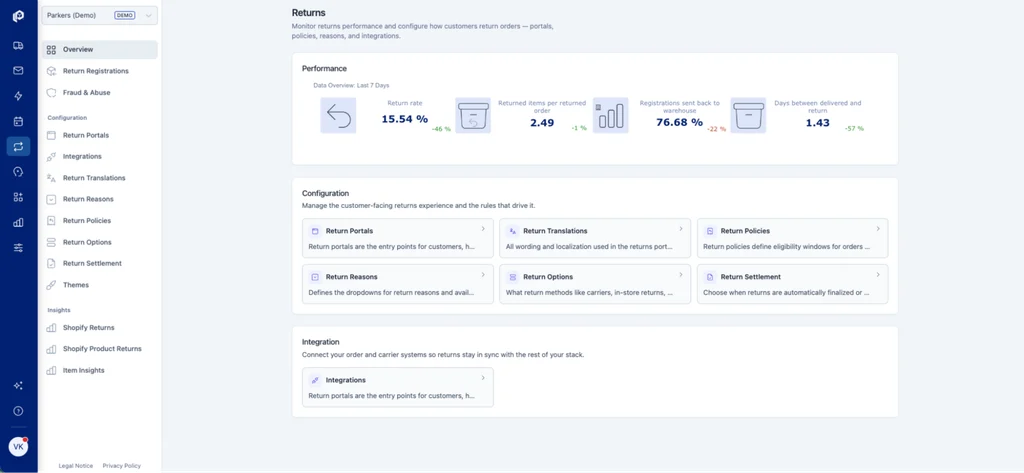
Your team can handle warranty claims and gift returns within the same returns management process. Warehouse staff can scan returned items when they arrive and pass return merchandise authorization (RMA) data to your WMS. Send branded updates, compare return rates by SKU or market and identify recurring reasons. Your technical team can connect the returns management software to existing systems through an API or webhook.
Key capabilities:
Branded self-service return portal: Give customers a portal that matches your brand. You can host it on a separate page, embed it in your site, or use a headless setup.
Policy and fraud controls: Set eligibility by product or return reason. Change the return window or fee based on customer risk and route suspicious return requests for review.
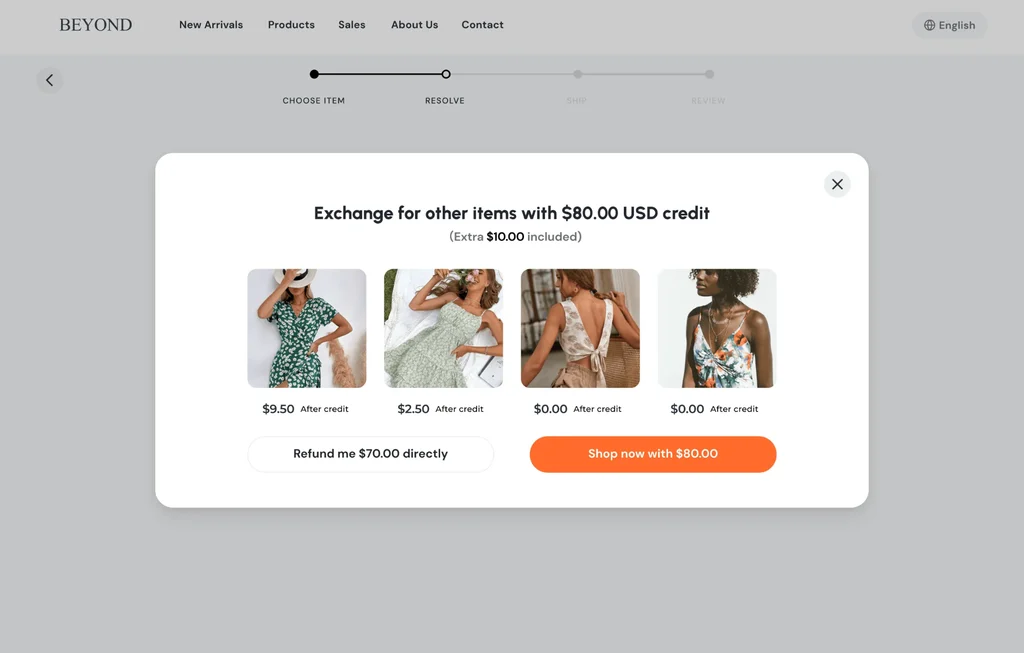
Flexible return resolutions: Offer exchanges or store credit before cash refunds. Add bonus credit or let an eligible customer keep an item for a partial refund.
Complex returns: Handle warranty claims with photo uploads. Accept gift returns or requests without an order number. Split a return when items need different processing routes.
Reverse logistics and warehouse processing: Give eligible customers a printable return label or QR code. Use the Return Processing App to scan returned items at a warehouse or store.
Branded comms and returns data: Send updates by email or SMS. Use returns data to compare rates by SKU, identify recurring reasons and monitor refund timing.
One customer, Conrad Electronics, saved 6,427 staff hours after introducing the self-service returns portal. Customers could register returns and follow their status online. Conrad gained earlier visibility into incoming items, helping its team choose the right processing route sooner. Book a parcelLab platform tour to see how it can improve your business processes.
Limitation: Some users note it can be tricky to understand how to configure available options.
2. ClickPost: best for ecommerce retailers that want personalized return policies and site-wide exchanges
Source: SoftwareAdvice
ClickPost is a post-purchase experience platform serving eCommerce brands with solutions for order editing, shipment tracking, returns and exchanges. The platform also offers branded tracking, personalized customer notifications, smart return policies, and post-purchase upsells that help brands improve customer experience and retain more revenue.
Key capabilities:
Self-service returns and exchanges give customers a branded portal to initiate returns, select pickup or drop-off options and choose eligible outcomes such as refunds, exchanges or store credit.
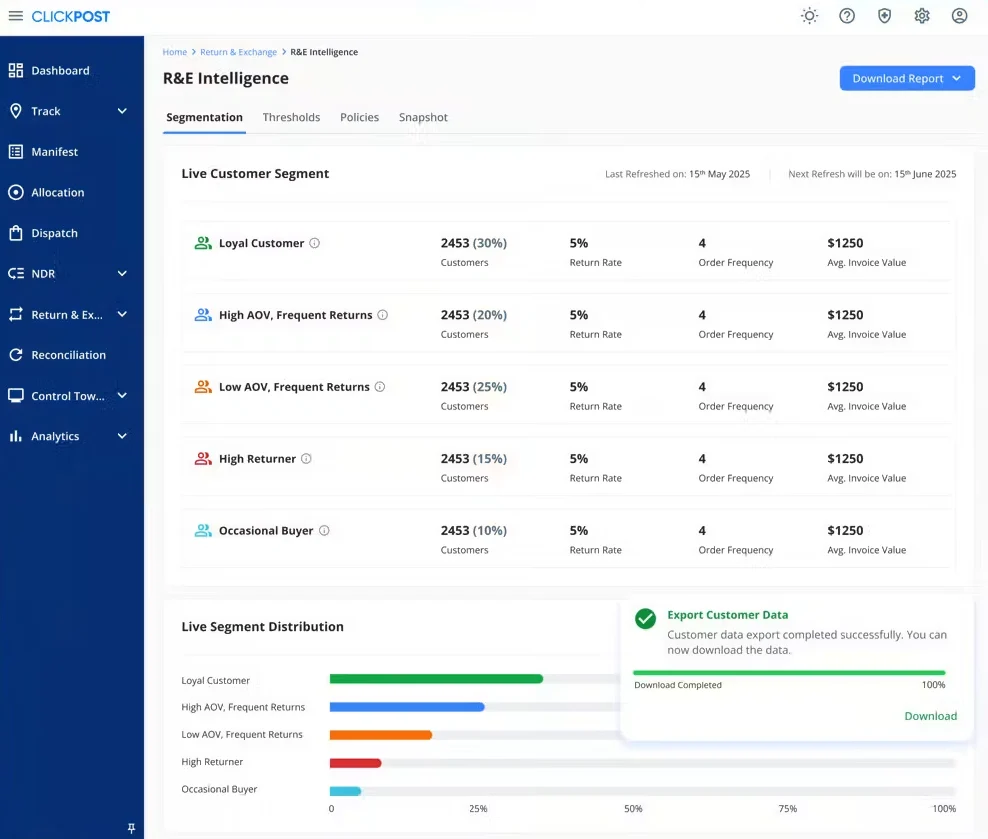
AI-personalized return policies that automatically segment customers based on their value, purchase history and return behavior, then apply different return windows, fees and refund methods to each segment.
Site-wide exchanges of returned products for other items in the catalog, including different sizes, colors or styles, with options to surface additional products during the exchange.
Tracking returns and communications in real time and sending personalized updates via email or SMS. AI tailors customer communications.
Return risk and fraud management that identifies high-return customers and applies stricter return policies, return fees, store-credit-only refunds or additional review for high-value items.
Limitation: ClickPost users report occasional delayed tracking updates and limited customization in some aspects.
3. Loop Returns: best for retailers prioritizing exchanges over refunds
Source: Loop Returns
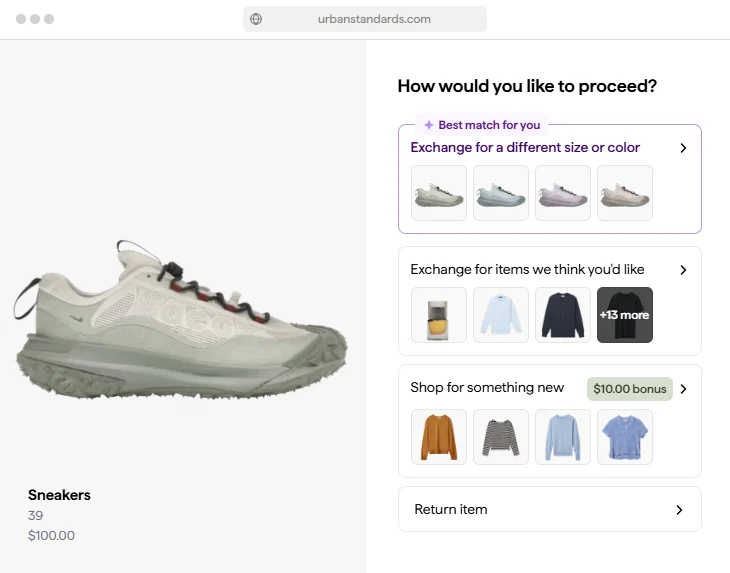
Loop Returns is a post-purchase platform for retailers that want more exchanges and fewer cash refunds. Customers can choose another product during the return, while your team can add extra credit to the offer. You can also automate routine approvals and review higher-risk requests.
Key capabilities:
Send a replacement before the original product reaches your warehouse through Instant Exchange.
Give customers Shop Now credit that they can spend across your catalog.
Offer Bonus Credit when a customer chooses an exchange instead of a refund.
Apply eligibility rules and return fees through configurable workflows.
Review or block higher-risk return requests using fraud controls.
Connect POS returns and box-free drop-offs through Happy Returns.
Limitation: Some users mention the automated rules feel rigid when handling unusual returns outside the standard process, leaving support staff to handle them manually.
4. Narvar: best for omnichannel retailers that need a large drop-off network
Source: Narvar
Narvar is a PPX provider for large omnichannel retailers that want self-service returns and a broad drop-off network. Customers can choose from the eligible return methods, while your team checks the request against order details and customer history. You can apply extra controls to risky returns.
Key capabilities:
Let customers use partner drop-off locations or arrange home pickup where available.
Apply return rules using order details and customer history.
Use risk signals to hold or review suspicious requests.
Offer an exchange or gift card before issuing a refund.
Issue instant refunds for eligible requests.
Route returned items according to your operational rules.
Connect commerce and warehouse systems through preconfigured integrations or APIs.
Limitation: Narvar’s main drawbacks include limited customization options, dependence on support even for simple adjustments, and difficult, time-consuming setup of key features.
5. AfterShip Returns: best for configurable returns across common ecommerce platforms
Source: AfterShip
AfterShip Returns is a self-service product for growing eCommerce teams that need a branded portal and configurable rules. Customers can see available return or exchange options. Your team can automate approvals and offer store credit. You can also review fraud signals before deciding where each item should go.
Key capabilities:
Let customers submit return requests through a branded portal and see eligible exchange options.
Set rules for approval and return routing.
Generate return labels and connect customers with supported drop-off options.
Use AI to review eligible requests or suggest replacement products.
Process warranty requests and apply EU withdrawal rules.
Check return frequency or package-weight discrepancies when reviewing fraud risk.
Connect common commerce systems. Use APIs or webhooks to pass return data to your WMS.
Limitation: Some find it too expensive for smaller business needs. Tracking issues come up, and some smaller carriers are missing from the list. You may also run into frustrations with customer support.
6. Happy Returns: best for box-free returns through physical drop-off locations
Source: Software Advice
Happy Returns is a returns service for US retailers that want customers to drop off eligible products without boxes or printed labels. Customers show a QR code at a participating location, where staff accepts the item and confirms the handoff. Retailers can issue the approved refund or exchange on the spot instead of waiting for warehouse delivery.
Key capabilities:
Let customers return eligible products without a box or printed label.
Use a QR code to confirm each handoff at a participating location.
Start an approved refund or exchange after the handoff.
Consolidate returned products before shipping them back.
Use risk scoring and a physical item scan to check higher-risk returns.
Hold suspicious transactions for further review.
Connect online requests with supported store returns or returns platforms such as parcelLab.
Limitation: Nearby drop-off options are limited in some areas. Customer support could also better handle order issues and defective items.
7. ReturnGO: best for retailers that need detailed return rules across several ecommerce platforms
Source: ReturnGO
ReturnGO is a returns and warranty platform for retailers that need detailed policies for different products or customer groups. Customers submit returns or warranty claims through one branded portal. Your team can automate approvals and control the shipping method. You can offer an exchange or store credit based on the order.
Key capabilities:
Show customers only the resolutions allowed by your return policy.
Approve requests and choose shipping options using order or return-reason rules.
Process warranty claims through the same portal, including gifts or products without a direct order record.
Offer paid return-shipping protection at checkout for eligible purchases.
Run return journeys in multiple currencies and languages.
Connect common ecommerce platforms. Use APIs or webhooks for custom setups.
Review return reasons and outcomes in the analytics dashboard.
Limitation: Most complaints cite reporting delays, difficult setup, limited options to resolve exchange issues, and inaccurate reporting in some cases.
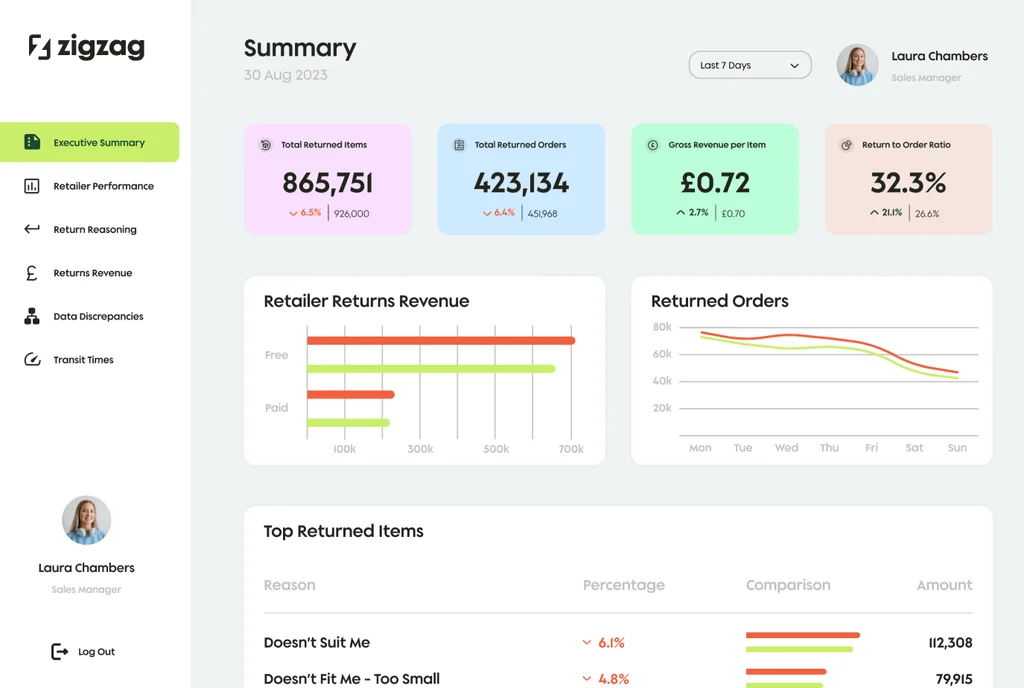
8. ZigZag Global: best for international returns and local carrier access
Source: ZigZag
With ZigZag, retailers can combine returns software with local logistics services in multiple countries. You can give customers familiar return methods in each market, then receive and inspect products closer to the buyer. This can reduce the need to send every international return to a single central warehouse.
Key capabilities:
Give customers access to available local return methods.
Charge a return fee when your policy requires it.
Handle customs documents for cross-border returns.
Receive and grade products at local warehouses.
Consolidate returned products before onward shipping.
Send suitable stock for restocking or resale.
Offer a replacement or store credit when the policy allows it.
Review return reasons and operating performance in reports.
Limitation: The interface could allow more automated self-serve functionality, as it requires manual management in some cases. Occasional technical issues and limited customization, along with inflexible carrier labels, negatively affect operational efficiency.
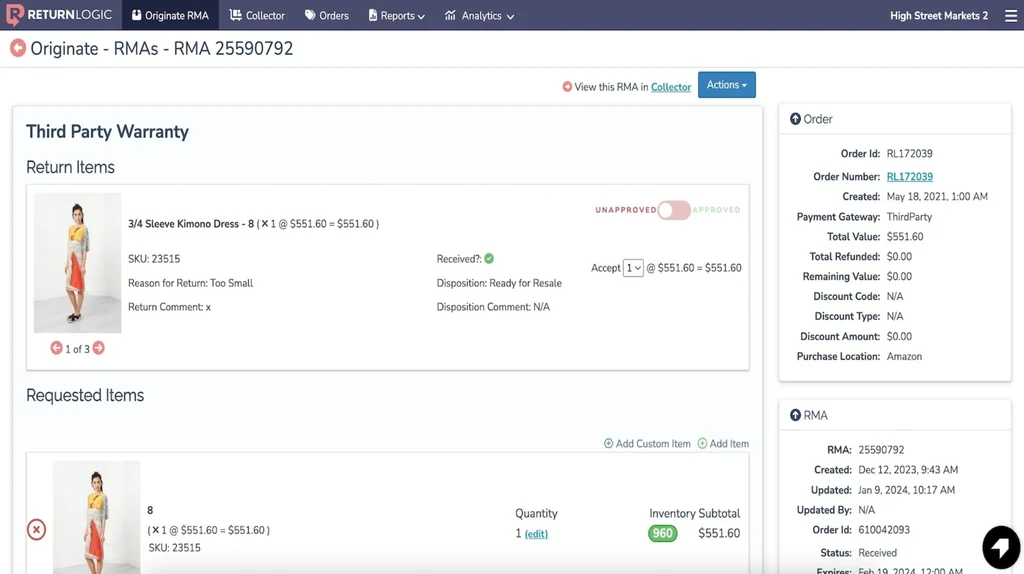
9. ReturnLogic: best for Shopify and BigCommerce retailers handling warranty claims
Source: Shopify App Store
ReturnLogic works best for Shopify or BigCommerce retailers that need returns and warranty claims in one product, with separate rules for each request type. Customers can submit standard returns or claims for products bought elsewhere. Your team can apply the applicable policy and use reporting features to identify products that generate repeated returns or warranty issues.
Key capabilities:
Create separate policies for returns or warranties and check each request against the relevant rules.
Accept warranty claims for products bought through third parties.
Create warranty forms for gifts or products without an order record.
Offer free exchange shipping or bonus credit.
Route selected SKUs to different inspection locations.
Connect return reasons with products and resolutions in reports.
Connect Shopify or BigCommerce directly. Use the open API for other systems.
Limitation: Users mention that navigation could be improved to support faster approvals. Reliance on 3PW introduces complexity and potential confusion for customers.
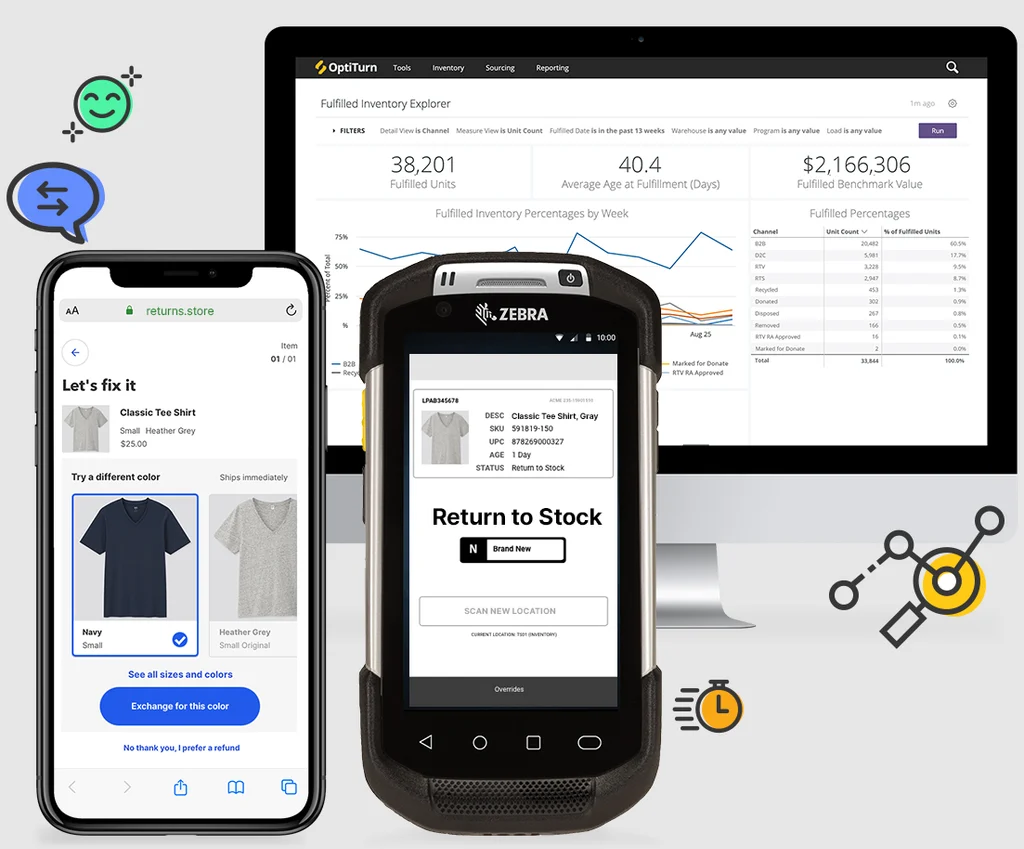
10. Optoro: best for warehouse processing and recovering value from returned inventory
Source: Optoro
Optoro is a returns management platform for large retailers and 3PLs that need to process products after they arrive at a store or warehouse. Customers submit return requests online. Warehouse teams then inspect each product and decide what to do with it. They can return sellable products to stock or send them to a resale channel to recover part of their value.
Key capabilities:
Let customers request a return and choose an eligible exchange or store credit.
Guide warehouse staff through receiving and product grading.
Apply rules that choose where each item goes next.
Return applicable items to inventory.
Send products to recommerce or secondary sales channels.
Compare processing costs with the value recovered through each route.
Connect existing systems through APIs or integration platforms.
Limitation: Limited rule controls made scanning errors easier to introduce. The reporting system is not always updated in real time. The returns process isn’t the simplest.
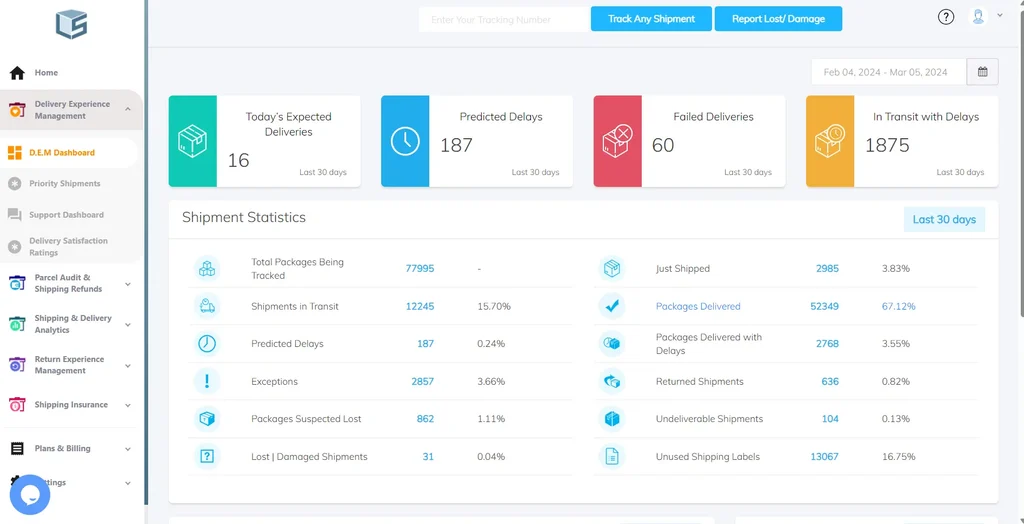
11. LateShipment: best for pay-as-you-go returns and separate carrier refund recovery
Source: BigCommerce
With LateShipment, teams can run a self-service returns portal on pay-as-you-go pricing. Customers submit requests, while your team applies return rules and offers exchanges or store credit. Finance or ops teams can use a separate carrier-audit service to check shipping invoices and file eligible carrier claims.
Key capabilities:
Let customers request returns through a branded portal.
Apply return windows and product eligibility rules to each request.
Offer variant exchanges or store credit. Add bonus credit when your policy allows it.
Generate return labels automatically.
Send return events to your help desk and track RMA status in one dashboard.
Adjust the final resolution after inspection, including deductions.
Connect ecommerce platforms and help desks through available integrations.
Use the carrier-audit service to find eligible carrier refunds and file claims.
Limitation: Some users find this option expensive and complex for new users. Reports take time to load properly. The ready-made templates for tracking pages aren’t always the best fit, and editing them requires contacting customer support.
Buyer’s checklist: six questions to ask every vendor
Once you’ve shortlisted your vendors, use these criteria to compare their capabilities:
Branded self-service portal: Look for a customizable portal where customers can start returns, choose a return method, generate labels or QR codes, and see clear instructions without contacting support.
Flexible return options: Check whether the solution supports exchanges, store credit, vouchers, instant refunds and multiple return methods such as labels, QR codes or in-store returns.
Customizable workflows: Make sure you can configure return windows, eligibility rules, refund or exchange options, and different workflows for specific customer or product segments.
Integrations: The platform should connect with your e-commerce, ERP, CRM and warehouse systems. Flexible APIs help when standard integrations don’t cover your setup.
Tracking and analytics: Consider real-time return tracking, automated customer updates and reporting on return rates, reasons, products and customer behavior. You should be able to turn that data into operational decisions easily.
Service and support: Compare implementation help, ongoing technical support, response times and the vendor’s ability to adapt as your return volume and requirements change.
How to choose your vendor for managing returns and improving the customer experience
The best returns platform should fit your operation first. Check that it supports your commerce stack, connects with your carriers and warehouse, and reliably moves return data across your systems. Then review how much control you have over policies, exchanges, refunds and fraud decisions.
But features alone won’t tell you which vendor will deliver the most value. Define the metrics that matter to your business, such as exchange conversion, refund speed, cost per return or recovery value, and make sure the platform can track them in the systems your teams already use.
For retailers managing returns and complex processes across markets and channels, parcelLab is worth a closer look. This returns platform combines policy-level control, flexible resolutions, warehouse processing and post-purchase communications in one workflow.
See how parcelLab can simplify returns and improve the post-purchase experience bybooking a demo.
FAQs
Start with your monthly return volume, sales channels and existing commerce systems. Then compare return-policy controls, exchanges, refunds, tracking, fraud controls and integrations. Test how the platform handles a real return from approval through warehouse receipt, including the RMA data and status updates passed to your other systems.
Pricing varies by return volume and features. Public plans range from about $19 per month for basic tools to hundreds of dollars per month for higher-volume plans, often with an additional fee per return. Enterprise plans typically use custom pricing.
When comparing vendors, calculate the annual cost at your normal and peak return volumes, including implementation, integrations, shipping labels, overage fees and other usage charges.
Yes, but integration depth varies. Solutions on this list support Shopify, Salesforce Commerce Cloud and SAP Commerce through native connectors or APIs. SAP’s own returns platform connects with SAP Commerce and Shopify through open APIs.
Ask vendors exactly which order, customer, inventory, RMA, refund and status events their connector supports and how often they sync. Integration information alone doesn’t tell you how it works.
Simple Shopify-based setups can take days, while enterprise implementations commonly take several weeks because you’ll need to configure policies, connect commerce and warehouse systems, test data flows and train users. More complex deployments can take longer.
For a lower-risk launch, start with one market or storefront, test the complete return journey, then expand once the workflow works reliably.
Usually, the difficult part is migrating data and managing returns already in progress. Before switching, confirm that you can export historical and open RMA data, decide how you will handle active returns, and preserve older data for reporting and fraud checks.
A parallel run can reduce risk. Keep both systems active until you resolve open returns in the old system.