

Narvar competitors: 10 alternative post-purchase platforms compared (2026)

Contents
- Quick comparison of the best alternatives to NarvarHow we compared top Narvar competitors
- Why brands leave Narvar for other returns portals
- 10 Narvar alternatives for an excellent post-purchase experience
- Narvar alternatives by module
- Questions to ask before you renew Narvar
- Choose the right post-purchase operating model.
- FAQs
If your Narvar renewal is in 60-90 days, it’s high time to decide whether to stay with the same provider or switch to one of the multiple Narvar alternatives available. First, ask yourself what’s making you question your current setup.
Maybe your support team is still struggling to process all the WISMO tickets, or your regional teams want more control over customer communication. Perhaps your return rules have fallen out of step with how the business operates, and Narvar can’t support your growing process complexity.
In this guide, we’ll analyze ten top Narvar alternatives and evaluate each against the same criteria to help you make the best decision for post-purchase customer success.
Quick comparison of the best alternatives to NarvarHow we compared top Narvar competitors
| Vendor | Best for | Regions | G2 rating |
|---|---|---|---|
| Narvar | Enterprise retailers needing a broad suite across delivery and returns, including claims | Global | 4.2 |
| parcelLab | Enterprise retailers needing own-domain tracking and country-specific return logic | Global | 4.6 |
| AfterShip | Teams buying tracking or returns as separate self-service products | Global | 4.7 |
| Loop Returns | Brands prioritizing exchanges and store credit in returns | Global | 4.7 |
| Malomo | Shopify brands needing custom tracking pages and transactional messages | Shopify stores worldwide | 4.0 |
| WISMOlabs | Teams reducing WISMO contacts through delivery exception workflows | Global | 5.0 |
| ClickPost | High-volume brands needing carrier allocation and failed delivery recovery | Global | 4.8 |
| Outvio | European retailers combining warehouse shipping with customer communication | Europe and the US | 4.9 |
| ReBound | Large retailers outsourcing return transport and item processing | Global returns network | N/A |
| ZigZag Global | Enterprise retailers managing cross-border returns and customs | Global returns network | 4.6 |
| Sendcloud | European retailers managing carrier booking and label creation | European shipping origins, with global destinations | 4.5 |
One consumer survey found that nearly half of shoppers stop buying from a company after a poor delivery or packaging experience. This means your choice in a returns and delivery experience provider can make or break your entire business.
When selecting and evaluating the options, we assessed these aspects:
- Key features: Support for order tracking and returns, delivery messages and operational reporting.
- Connections: How each platform connects with carriers, commerce systems and other business software.
- Branding: The depth of hands-on control over tracking pages and customer messages, including sender names and visuals.
- Regional coverage: The carriers and markets where you can manage shipping or returns, plus local operational support.
- Setup and support: How complicated implementation is and how much help the vendor provides. Recent customer feedback helped us assess the experience.
Why brands leave Narvar for other returns portals
Despite Narvar’s popularity and scope, it has gaps that other platforms fill. If these issues pile up and cause frustration, it may be time to spend your PPX improvement budget elsewhere.
Frequently reported limitations:
- Implementation duration: G2 reviews mention implementation complexity, saying it takes more time and effort than expected, especially when multiple departments have to get involved. Some carrier setups need extra configuration steps or custom development.
- Limited customization and branding: Users mention limited control over customer communications in the platform. Tracking pages can feel generic, and notification settings are too restrictive to target specific customer groups or promotions. Reviewers also mention needing Narvar support for minor design or content changes, which can delay updates and limit their control over the returns portal.
- Reporting and analytics limitations: Customer sentiment shows that Narvar users want more filters and greater control over the fields shown in reports. Some also mention limited item-level analysis, slow data updates or having to reformat exported reports.
- Support responsiveness: Another recurring complaint is concerning slow responses through the ticketing system and long waits for issue resolution. Some people note that they received little notice when customer messages fail, or platform data is temporarily unavailable.
10 Narvar alternatives for an excellent post-purchase experience
1. parcelLab for enterprise global coverage with operational complexity
parcelLab is a post-purchase experience platform for enterprise retailers and larger mid-market brands. It’s a strong fit when shipments move through many carriers or return rules change by country and storefront. Delivery promises remain connected to each order’s tracking history. Customer messages and return activity stay attached to that order too.
Live data can reach parcelLab through APIs or an event bus, and SFTP handles batch files. Prebuilt apps connect systems including Shopify and Salesforce Service Cloud. The Order Status Page and Returns Portal can live inside your website, letting customers check a parcel or request a return without leaving your domain.
Key capabilities:
- Delivery promise and shipment tracking: parcelLab connects with over 550 carriers and predicts delivery dates using carrier and warehouse data, adjusted for your operating rules. You can show the date on product pages or at checkout, and then in post-purchase messages. Split shipments remain under one order view, and Trending Late estimates the risk of missing the date shown to the customer.
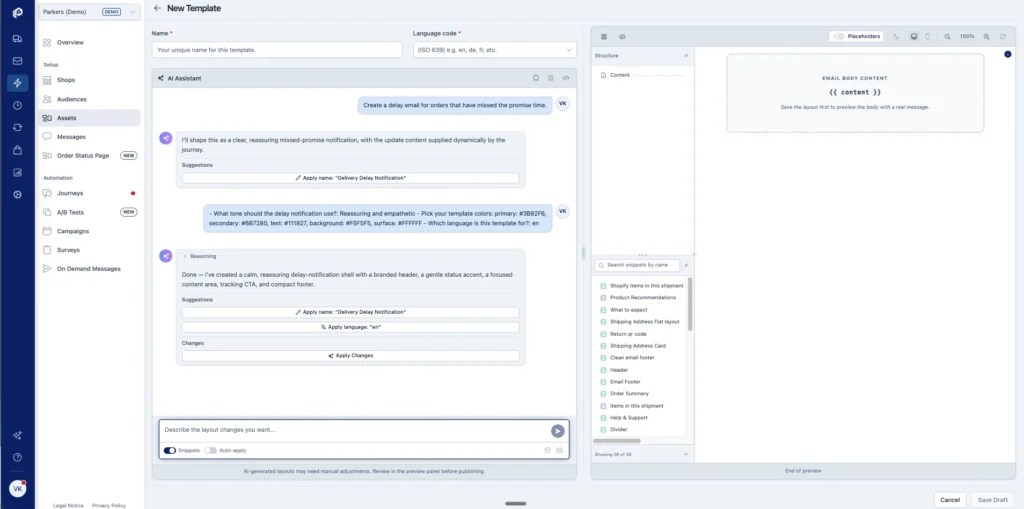
- Branded tracking and customer communication: You can embed a custom tracking page on your website or in your app. This page can show purchased items and split shipments, with space for banners or product recommendations. Your team can edit email and SMS notifications inside parcelLab and create separate journeys for each market. A/B testing lets you compare the effects of message variants.
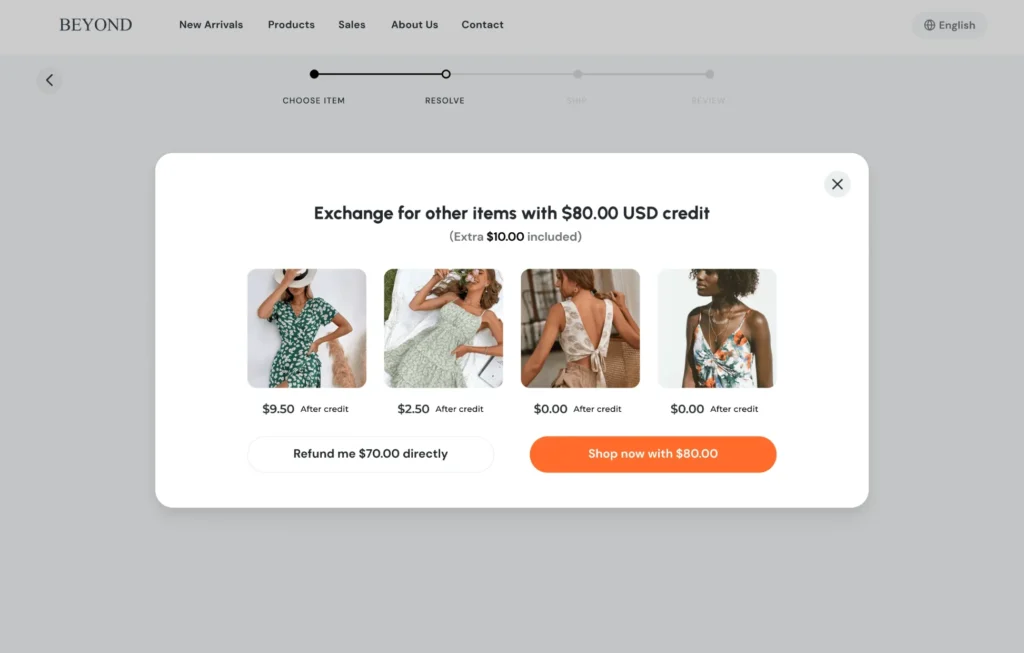
- Returns management tools: Connect the returns portal with your OMS and carrier systems. That way, your return registrations will appear in the source system or warehouse, reducing manual work between e-commerce teams and operations. Return logic varies by item or customer segment. Customers can choose an exchange or refund, with options to replace refunds with store credit. The portal supports return labels and QR codes as well as split returns and cross-border processing.
- Risk and operational insight: Fraud & Abuse Protection adds behavioral risk signals to tracking records, which can affect return eligibility or refunds. parcelLab also shows insights on carrier performance and delivery exceptions. The AI Copilot answers questions about anything you need help with and can troubleshoot orders.
How it compares to Narvar: parcelLab is the better alternative if you need the tracking and returns journey to stay inside your website. You can manage market-specific pages and messages. The order view even connects split shipments and returns. parcelLab has more customization options, smoother integrations, and AI features that proactively address problems.
Book a parcelLab demo to see how it works.
2. AfterShip for modular tracking and returns
AfterShip suits e-commerce teams that want to launch shipment tracking or returns as separate products, then possibly expand to more modules later. Note that Tracking, Returns, Shipping and other pillars are all paid separately. The platform connects to Shopify and Salesforce Commerce Cloud, among others, with dedicated tracking and returns integrations for SFCC. APIs and webhooks let you build a custom stack.
Key capabilities:
- Tracking and communication: Carriers report shipment events differently, so AfterShip converts them into a consistent set of statuses. Those updates can appear on a tracking page hosted on your domain and trigger email or SMS messages. The dashboard makes delivery problems easier to spot and shows each carrier’s performance.
- Returns and exchanges: Customers submit a request through a self-service portal. AfterShip checks it against your eligibility rules and return window before showing the available options, such as an exchange or store credit. Customers can return individual products from a bundle. Fraud checks can flag repeated returns or a parcel weight that doesn’t match the request.
- Shipping and delivery estimates: AfterShip Shipping applies your shipping rules when creating carrier labels for orders placed through different sales channels. AI EDD shows a predicted delivery date on product pages or at checkout, then recalculates the estimate after dispatch.
How it compares to Narvar: AfterShip lets you start with tracking or returns and handle much of the setup internally. The entry prices are public, so you can estimate the initial spend before signing up. Adding more AfterShip products means separate subscriptions and more configuration. Narvar uses custom pricing, so you won’t see a comparable starting cost until you contact its sales team.
See also: AfterShip vs Narvar detailed comparison.
3. Loop Returns for exchanges and store credit
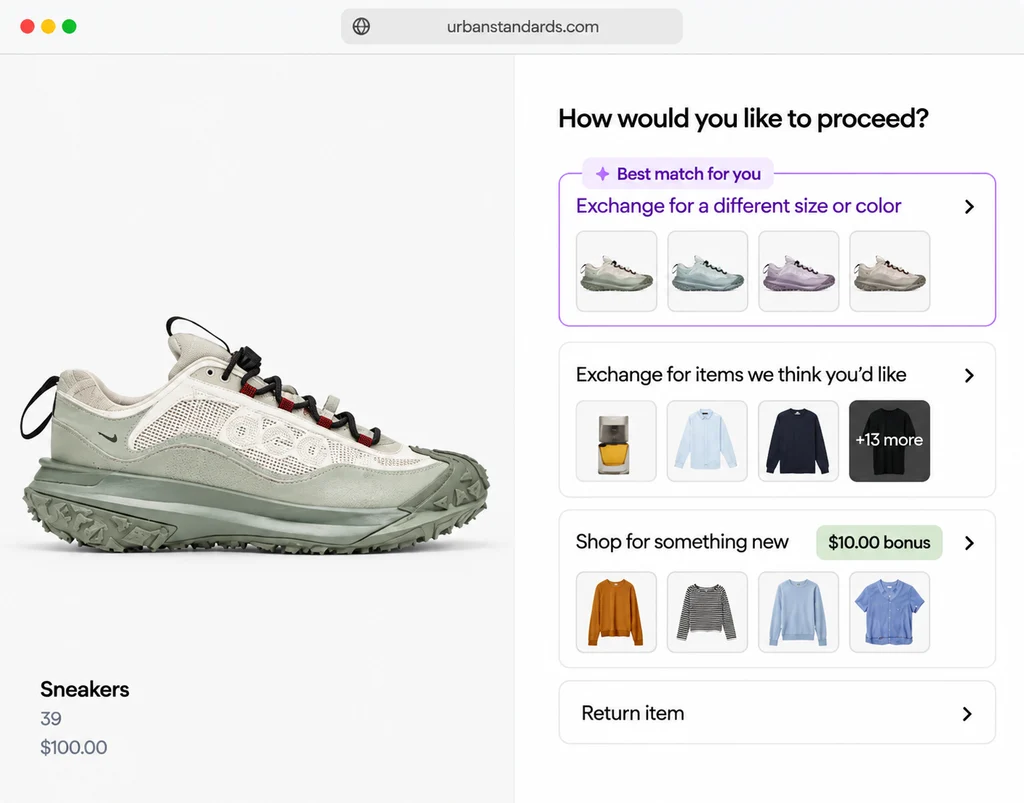
Loop Returns is an e-commerce operations platform for brands with complex return policies and a strong need to retain revenue through exchanges or store credit. The main focus is optimizing the returns-related processes. Loop also includes tracking features and pre-purchase delivery estimates. It’s a Shopify-first product, though it also offers integrations and APIs.
Key capabilities:
- Return policies and routing: Set return rules by product or region, with separate routing for each warehouse. Eligible customers can use carrier labels or drop items off in store. The Happy Returns integration also supports box-free returns.
- Exchanges and fraud controls: The portal can be configured to offer exchanges or store credit before a refund. Loop Fraud flags higher-risk requests for team review before they’re approved.
- Tracking and delivery estimates: Loop Tracking provides branded tracking pages and alerts for stalled or delayed shipments, with updates sent by email or SMS. Loop Promise displays delivery estimates before purchase, based on fulfillment data and carrier performance.
How it compares to Narvar: Loop is for returns and keeping revenue in-house. It offers flexible store credit options, a customer-first flow, and configurable policy rules with fraud review.
4. Malomo for branded Shopify tracking pages
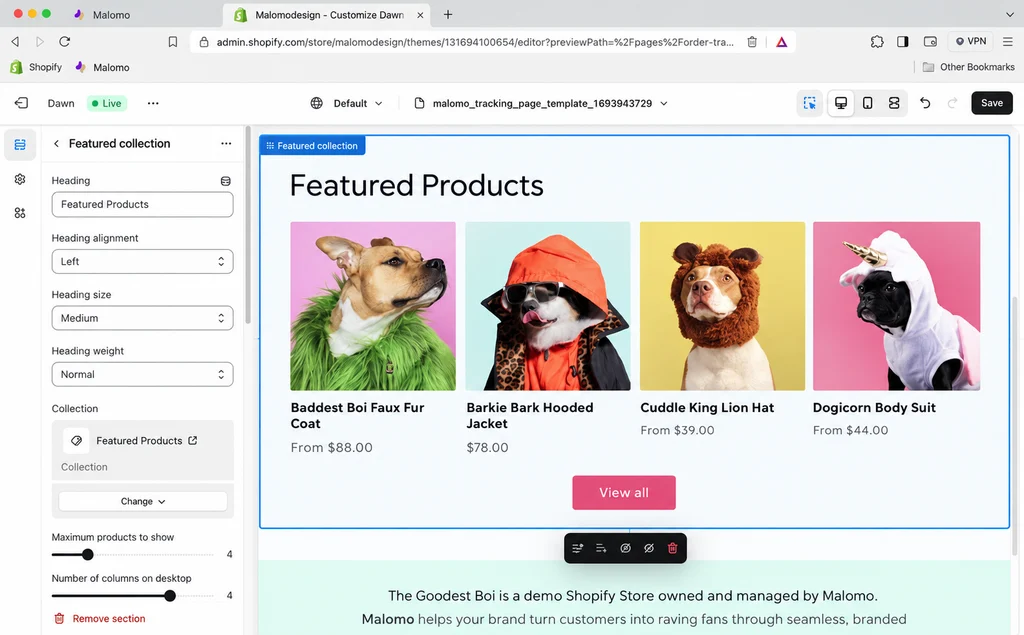
Malomo is a good fit for Shopify teams that want to launch custom tracking pages and delivery messages quickly. It pulls Shopify order data into storefront pages and connects with tools like Klaviyo and Gorgias to pass delivery data through. The visual builder makes designing pages and messages straightforward. Since Redo acquired Malomo in 2026, the tracking product now comes paired with Redo’s returns and exchanges platform.
Key capabilities:
- Branded tracking pages: The Tracking Page Creator lets you adjust the layout and add product recommendations or campaign content — no code needed. The page lives inside the Shopify storefront.
- Delivery messages: Shipment events trigger branded email or SMS updates via Klaviyo or Attentive.
- Reporting and attribution: Dashboards show delivery issues and customer engagement. Revenue attribution connects purchases with page visits.
How it compares to Narvar: For a Shopify tracking project led by a marketing or CX team, Malomo should work well. The visual editor and integrations with tools like Klaviyo give teams hands-on control over tracking pages and delivery messages.
5. WISMOlabs for delivery status ticket reduction
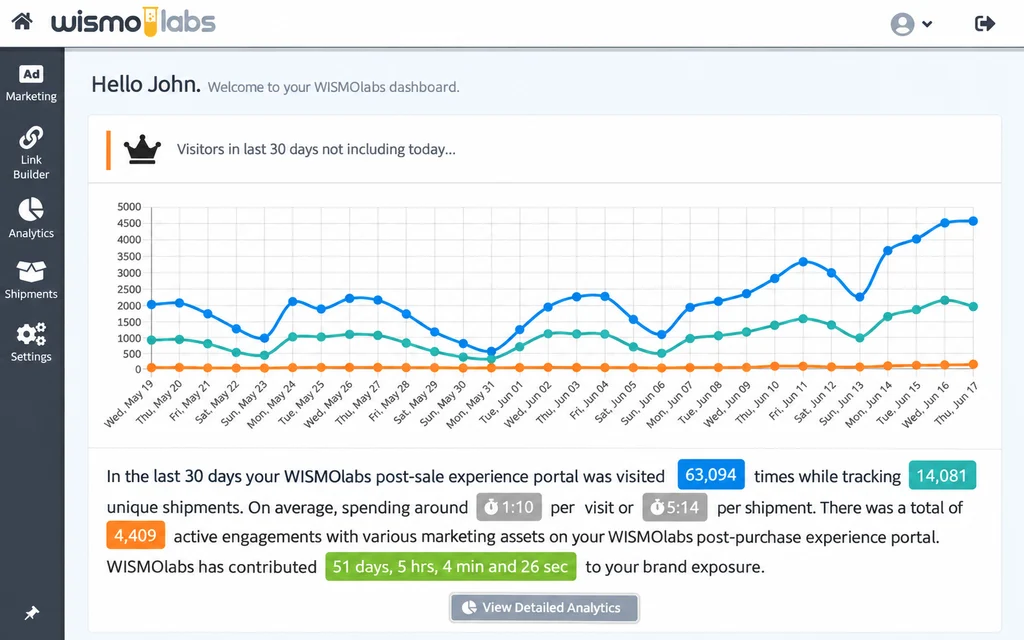
WISMOlabs helps e-commerce brands manage status tickets and delivery exceptions after an order ships. It links order context to carrier events and applies business rules to drive messages and operational actions. WISMOlabs connects to multiple carriers, along with platforms like Shopify and Magento, and supports custom connectors through APIs and webhooks.
Key capabilities:
- Tracking and customer updates: WISMOlabs collects shipment events from carriers and displays them on a branded tracking portal hosted on your domain. Customers receive delivery updates by email, SMS or push notifications. Webhooks send the tracking data to your other business systems, supporting a connected workflow.
- Exception management and analytics: When tracking data shows a delay or missing scan, WISMOlabs can change or stop the planned customer notification. It can also send the issue to a support or operations system for follow-up. Dashboards show delivery issues and compare carrier performance; separate reports also track customer message engagement.
- Return automation: Customers can request returns through a branded portal. The portal provides a QR code or shipping label and sends status updates as the parcel travels back to the retailer.
How it compares to Narvar: WISMOlabs is an easier spend to justify when your main goal is fewer delivery-status queries. Its rules can change an outgoing customer message when a delay appears or pass the case to a support system for follow-up.
See also: WISMOlabs vs parcelLab side-by-side comparison.
6. ClickPost for carrier allocation and failed delivery recovery
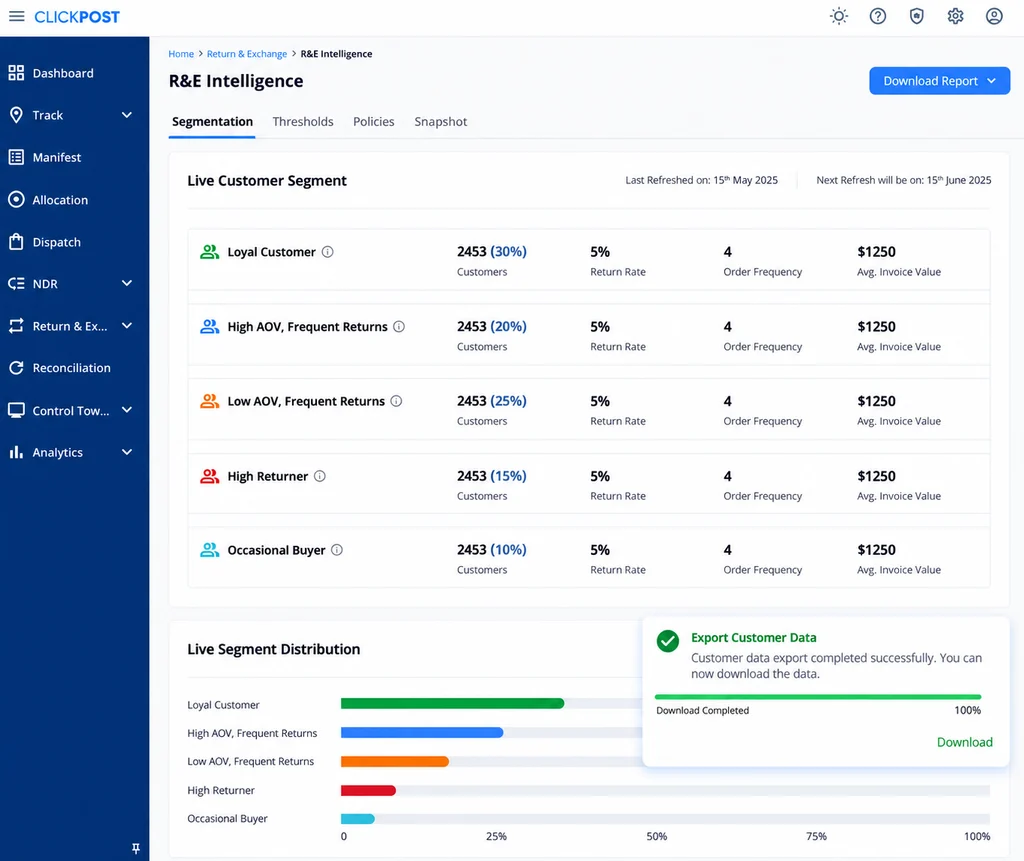
Using ClickPost begins with carrier operations. It can automatically select a carrier for each shipment using your rules and carrier performance data. After dispatch, the platform tracks the order, failed delivery attempts or returns. This operational depth makes ClickPost relevant to high-volume brands with a complex carrier mix. Prebuilt connections cover major commerce platforms and back-office systems, while APIs support custom setups.
Key capabilities:
- Carrier allocation: Allocation rules can factor in destination, parcel weight, service level, and shipping cost. ClickPost can also weigh past carrier performance — including SLA adherence and return-to-origin rates — when deciding which service gets the order.
- Tracking and failed deliveries: ClickPost converts carrier scans into consistent order statuses. Customers see those updates on a branded tracking page and can receive them by email, SMS or WhatsApp. After a failed delivery attempt, ClickPost collects the customer’s instructions and sends them to the carrier.
- Returns management: Return rules can change according to a customer’s purchase history or past return activity. The returns portal also supports exchanges and store credit. You choose when to give refunds. Reverse tracking follows the parcel back to the warehouse.
How it compares to Narvar: Carrier selection is the main benefit. It can allocate each shipment using service performance and recover failed delivery attempts by sending customer instructions back to the carrier.
7. Outvio for European shipping and warehouse management
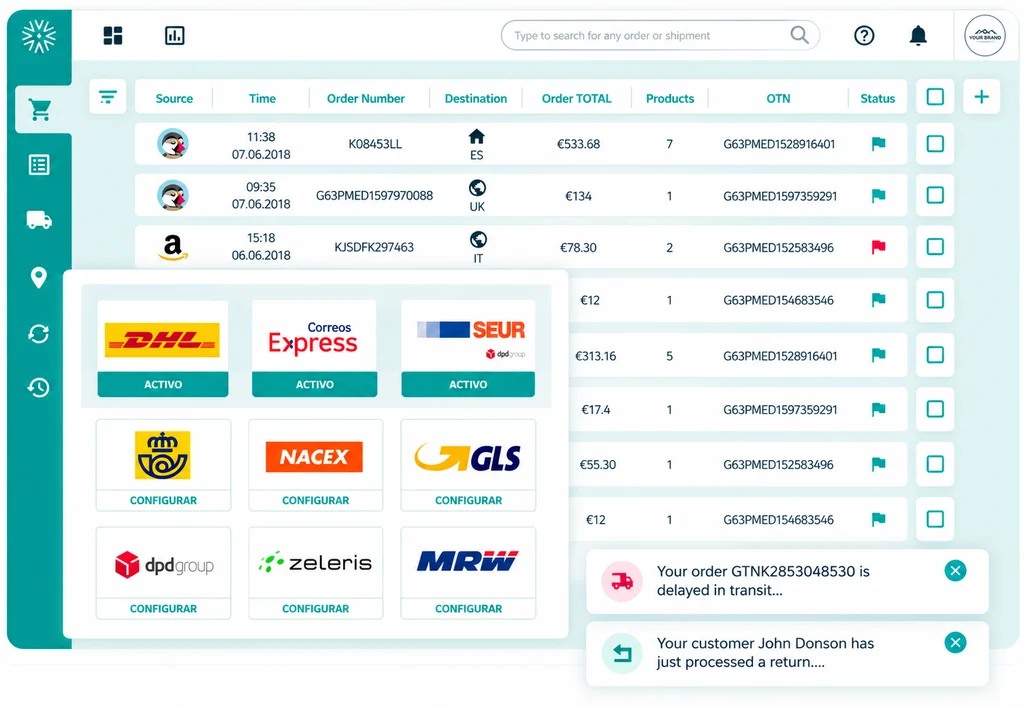
Outvio connects warehouse shipping with the post-purchase customer experience. Orders move through selection and label creation before the platform handles delivery messages and returns. This reduces handoffs between warehouse and CX teams, which makes it a natural fit for European ecommerce retailers and 3PLs. Retailers can plug in their own carrier accounts, so their negotiated rates and service terms carry over. Prebuilt integrations and an API connect Outvio to the rest of the commerce stack.
Key capabilities:
- Shipping and warehouse management: Outvio can choose a carrier service based on rules your team sets, such as the parcel’s destination or weight. Its warehouse tools let staff scan products while picking and packing orders, then print labels individually or in bulk. You can manage several warehouses and produce customs documents for international shipments.
- Customer communication: Customers can check delivery progress on a tracking page with your domain and branding. Outvio sends updates by email, SMS or WhatsApp. You can also compare message version performance with A/B tests. Delayed orders and other delivery issues are grouped in one view, giving support staff a clear list of cases to follow up on.
- Returns: Outvio checks each return request against the policy for the relevant country or sales channel. The portal can ask customers for photo evidence before approving a return and block items that fall outside the policy. For low-value items where return shipping isn’t worth the cost, retailers can let customers keep them. Exchanges and store credit are also available.
How it compares to Narvar: Choose Outvio when you want to manage warehouse dispatch alongside tracking and returns. Staff can pick and pack each order, then select the carrier service and print the shipping label. After dispatch, the same shipment data powers customer updates and the returns process.
8. ReBound for outsourced return transport and processing
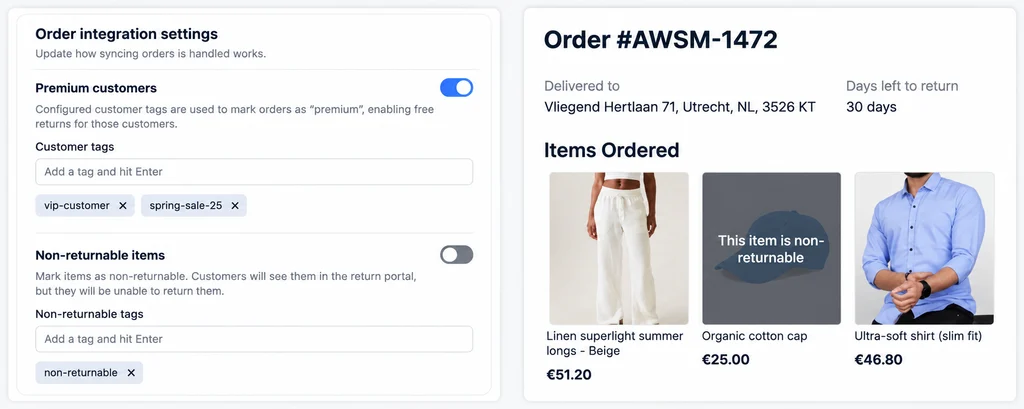
For some retailers, the hardest part of a return happens after the customer submits the request. ReBound handles that physical journey alongside the returns portal—arranging local drop-off or courier collection, consolidating parcels at nearby hubs, and managing cross-border transport and customs clearance. That makes it a strong fit for large retailers that want returns software and managed reverse logistics in one place. Shopify integration and API connectors are available.
Key capabilities:
- Return initiation: Customers start a return through a localized portal and choose a drop-off or collection method available for their region. The portal issues a shipping label or paperless QR code. ReBound also sends return updates by email.
- Transport and consolidation: Parcels move into local hubs, where ReBound groups them before shipping across borders. The service clears customs and routes goods to the retailer’s chosen destination.
- Inspection and processing: ReBound verifies and grades returned items on arrival, then routes them for resale or rework. Items that can’t be resold go to recycling. Retailers can trigger refunds as soon as local verification is complete.
How it compares to Narvar: Choose ReBound if the hardest part of returns is moving parcels across countries. Customers can use a local drop-off point or request collection. ReBound consolidates the parcels at regional hubs and handles customs for cross-border returns. It can also inspect the items after arrival.
9. ZigZag Global for cross-border returns and customs
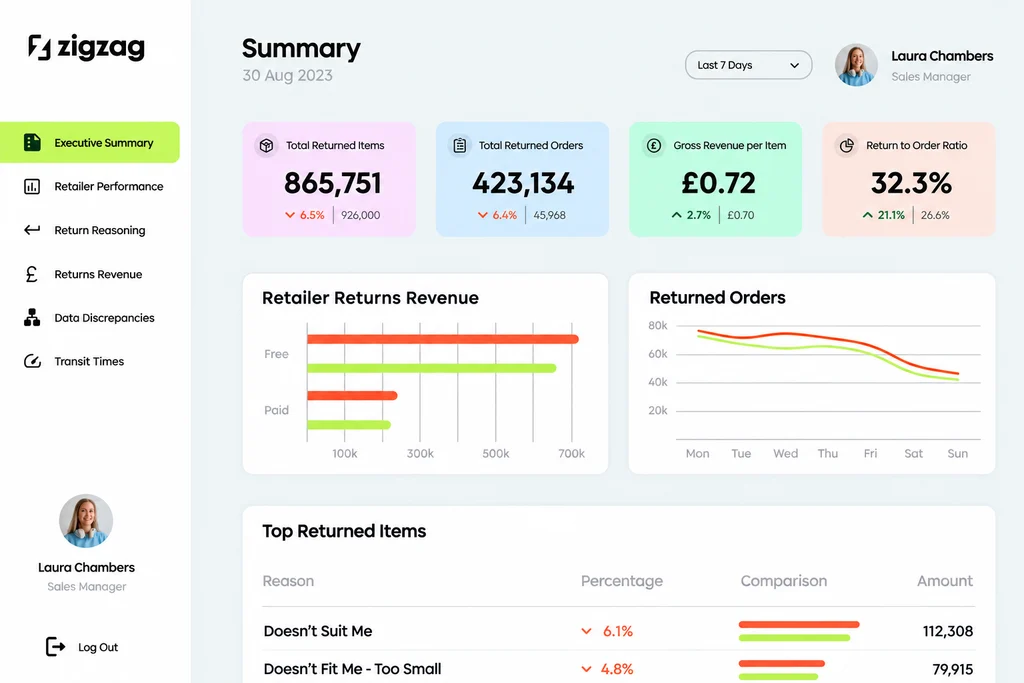
ZigZag Global added Shipup’s outbound tracking and delivery communication to its cross-border returns service in 2026. Now you can manage the returns portal, physical reverse logistics, and outbound tracking in one. It’s ideal for enterprise retailers managing returns across markets. The integration options include popular commerce platforms. An API supports custom deployments.
Key capabilities:
- Return options: The branded portal applies your return policies and shows the methods available in each market. When a customer requests a return, you can charge a return fee and offer an exchange, store credit or a full return.
- Physical returns network: Customers can use local drop-off points or arrange a collection. ZigZag manages international shipping and customs clearance. Returned goods can then be sent to your chosen warehouse or processing location.
- Tracking and delivery communication: ZigZag has branded tracking pages and delivery notifications sent through email, SMS or WhatsApp. Delivery estimates show the expected arrival date before checkout and update after dispatch.
How it compares to Narvar: ZigZag stands out in cross-border reverse logistics. Its physical network gives customers local return options and handles customs. Shipup covers outbound tracking and delivery messages.
10. Sendcloud for European carrier booking and label generation
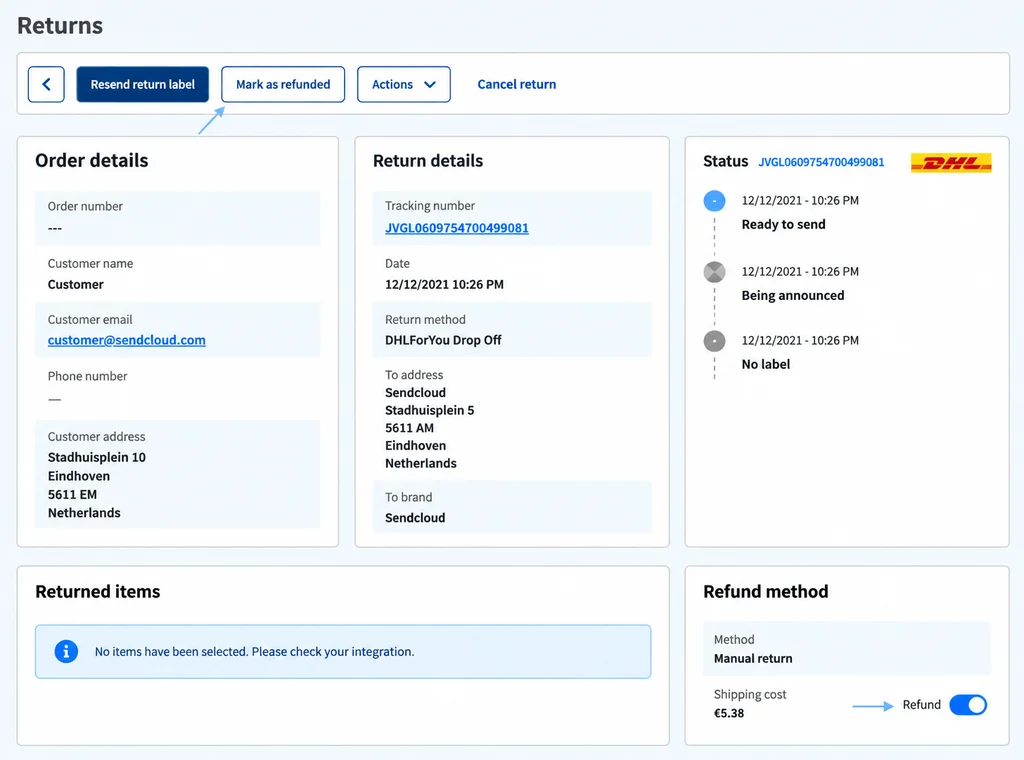
If you run a European ecommerce business, Sendcloud gives you options to show delivery choices at checkout, book services with selected carriers and print shipping labels while your team packs each order. Once the parcel leaves your warehouse, Sendcloud handles branded tracking and customer returns.
You can use Sendcloud’s shipping rates or connect your existing carrier contracts. The available services depend on the country you ship from.
Key capabilities:
- Checkout and warehouse shipping: You can show estimated delivery times and nearby service points at checkout. Same-day options are available where supported. In the warehouse, Pack & Go lets your team scan a barcode and print the correct label without moving between several screens.
- Tracking and support: You can give customers a branded tracking page and send updates by email, SMS or WhatsApp. When a carrier reports a problem, Support Automation brings the case into one workspace and can request documents that your team still needs.
- Returns: You can set different return rules by product or region. Options may also change by sales channel. Sendcloud supports return fees, paperless labels and customs documents for parcels crossing international borders.
How it compares to Narvar: Choose Sendcloud when your priority is the work around dispatch, from booking carrier services and printing labels to tracking parcels and processing returns. It covers more of the warehouse shipping process than Narvar. But check whether Sendcloud offers the services you need in every country where your warehouses ship orders.
Narvar alternatives by module
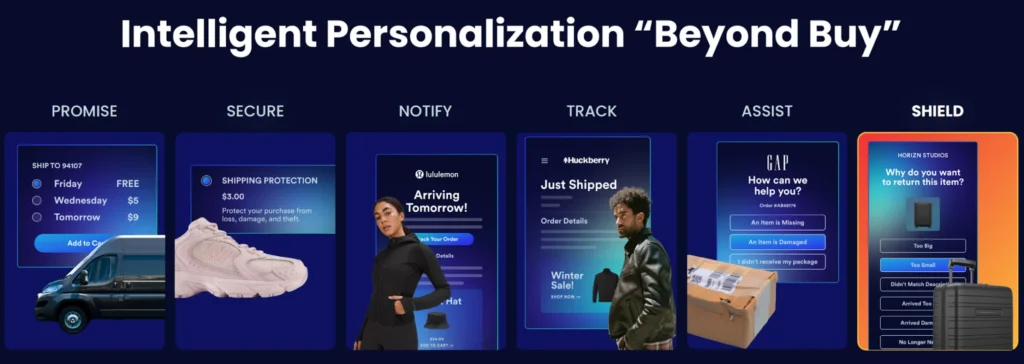
| Narvar product | What it covers | Alternatives |
|---|---|---|
| Promise | Delivery estimates before purchase |
|
| Secure | Optional shipment protection and customer claims |
|
| Track | Branded tracking pages and shipment visibility |
|
| Notify | Branded delivery updates and exception messages |
|
| Shield | Returns and exchanges with fraud screening |
|
| Assist | Delivery claims and fraud screening |
|
Questions to ask before you renew Narvar
90 days before contract renewal is the best time to consider switching vendors. Ask yourself (or your team) these questions to help you make the best Narvar replacement or contract renewal decision:
- Which Narvar features or modules delivered measurable value over the past 12 months?
- Which features are we paying for but rarely or never use?
- What are your biggest bottlenecks for customers, operations and support teams?
- Which shipping, tracking or returns processes still require manual work?
- Is there anything we can improve that Narvar doesn’t currently handle?
- Can alternative platforms support our carriers, markets, storefronts and order volumes?
- Can we replicate or improve our current tracking, delivery and returns experience without significant workload?
- How easily can we migrate our data, integrations and customer-facing experiences to another platform?
- What would we gain from switching, and what would we risk losing?
- What is the total cost of staying with Narvar versus switching to an alternative?
Choose the right post-purchase operating model.
The right choice depends on what creates the highest cost or operational constraint for you. ClickPost and Sendcloud fit shipping execution problems. ReBound and ZigZag make more sense when physical return transport is the hard part. Loop improves return outcomes, while AfterShip gives you an easy, modular starting point.
We recommend parcelLab if you run an enterprise retail operation and want to replace several Narvar products with one platform. Before customers place an order, you can show them an expected delivery date. After purchase, Engage keeps tracking and customer messages on your domain, while Retain applies different return rules in each country.
A return request in one market doesn’t have to follow the same policy elsewhere. And because parcelLab keeps delivery updates, messages and returns connected to the same order, local and central teams work from the same customer history.
If you need that combination of market control, website ownership and reliable handling of complex use cases, book a parcelLab demo.
FAQs
parcelLab is the best alternative for enterprises with multi-carrier operations, complex return policies and global reach. It combines own-domain tracking and dynamic returns workflows with branded customer communication.
Narvar cost is quote-based and depends on order volume plus module scope.
Yes, but confirm export options and the data retention period with Narvar. The provider’s terms state that the customer retains ownership of its company data, but Narvar’s platform can export data for operational use. Before switching, ask Narvar what data can be exported, in which format and how much historical data is included.
Several alternatives support these commerce platforms, although the level of integration varies. Sendcloud has a dedicated Salesforce Commerce Cloud integration, while parcelLab supports integration through APIs and other data feeds. Narvar itself has dedicated integrations for both Salesforce Commerce Cloud and SAP Commerce Cloud.
Liked this Post? View more related posts below