
 Comparisons
Transform your post-purchase experience today
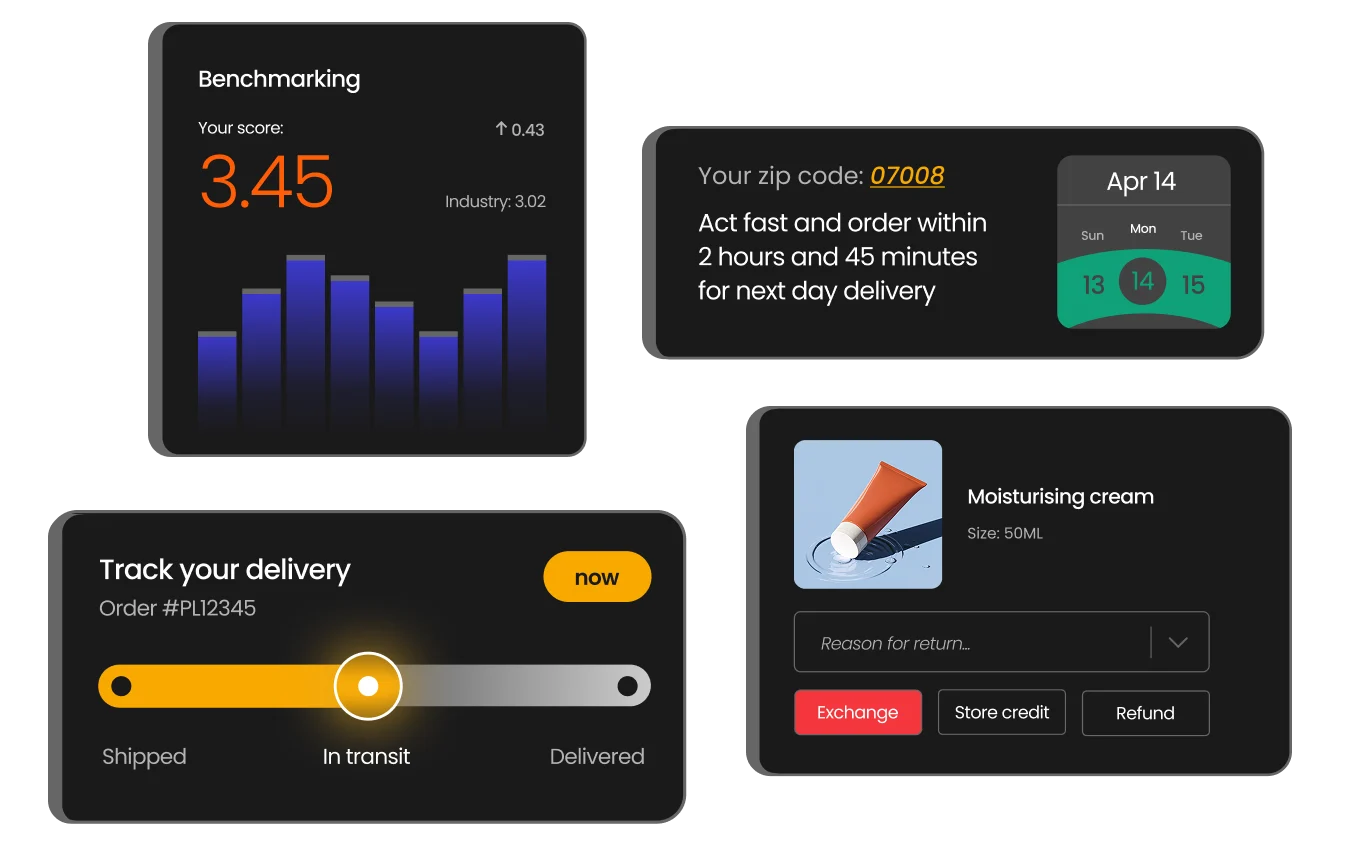

Narvar and parcelLab both cover the main post-purchase functions, from delivery dates and branded tracking to returns, exchanges and fraud rules. parcelLab gives you finer control over return policies, risk thresholds and multi-market messaging, with tracking and returns on your own site. This page compares control, customer-facing experiences, operational rules, AI availability and measurable results, including where Narvar can be the better choice.
| Feature | parcelLab | Narvar |
|---|---|---|
| Platform scope | Checkout to return in one platform: delivery dates, tracking, notifications, returns, fraud rules and reporting, designed for retailers selling across multiple countries, with 450+ carriers | Delivery dates, tracking, notifications, returns and fraud rules, plus delivery-claim screening and, mainly for US retailers, shipping protection and drop-off returns |
| Delivery promises | Machine-learning dates on product pages and at checkout; promised-vs-actual reporting; alerts for parcels likely to arrive late | Machine-learning dates on product pages and at checkout; alerts for shipments at risk of missing their date |
| Tracking pages | Branded, embedded on your own site; every parcel in an order on one page; 25+ languages; content that changes by delivery status needs light developer work | Branded pages built in a no-code editor; content by shipment status and location; page elements you can embed across your site |
| Customer notifications | Email, SMS, push and WhatsApp; trigger rules you define for warehouse delays, split shipments and click-and-collect; email A/B tests | Branded updates across several channels, including SMS; event-based triggers; marketing content and product recommendations |
| Returns and exchanges | Return windows and exclusions by product; refunds, store credit, exchanges and keep-it offers; warranty, in-store, no-order and cross-border returns | Eligibility rules; exchanges and gift cards; box-free drop-off at thousands of US locations, with returns consolidated |
| Fraud controls | Order risk scoring and configurable rules for return eligibility, return windows, refund timing, compensation options, verification and manual review. Risk-based claims management, including self-service missing-parcel claims. | Risk-based return eligibility and refund timing; a separate product for “item not received” claims |
| Analytics | Delivery, exception, message and return-reason reports; industry benchmarks; optional custom dashboards, returns by SKU and return forecasts | Configurable operations dashboard for delivery visibility and exception investigation; return-reason data |
| AI and automation | AI assistant that answers from your data (live); changes made by the assistant after you approve them; order- and return-status agent | AI engine behind fraud and personalization decisions; agent for delivery, return and exchange issues |
| Integrations | API, file transfer or event bus; apps for Shopify, Magento 2, Shopware, Klaviyo, Postscript, Zendesk, Gorgias, Kustomer, Salesforce Service Cloud and Apple Wallet | Shopify, BigCommerce, Magento, Salesforce, Klaviyo, Zendesk, Gorgias, Attentive and Gladly |
| Implementation and support | Standard 4–8 weeks; dedicated customer success manager; teams in the US and Europe | Timeline scoped per project; account managers and an online knowledge center |
| Claims management | Branded self-service claims for missing, delivered-not-received and damaged parcels; configurable eligibility rules, evidence collection, carrier-compliant claim records and claims reporting | Dedicated Assist product for delivery claims, with a branded self-service portal, AI-powered fraud screening, identity verification and risk-based refunds or replacements |
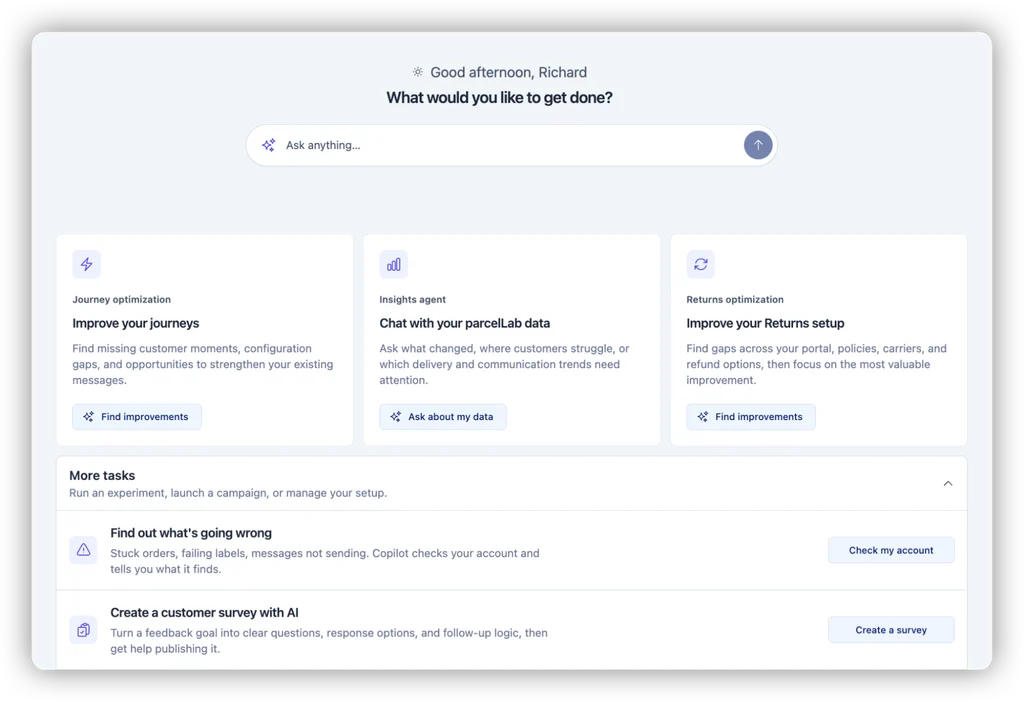
parcelLab puts the whole order on one branded tracking page, embedded on your own website. If a jacket and boots ship from two warehouses with two carriers, the customer sees both parcels in one place, in your design.
The page supports 25+ languages and can show purchased items, promotional banners or your own product recommendations. Content can also change by delivery status, such as a loyalty sign-up in transit and a discount code after delivery, with light front-end work from your developers.
You set the trigger for every parcelLab message, including warehouse delays, split shipments and click-and-collect pickups. Messages go out by email, SMS, push notification or WhatsApp, and you can A/B test email versions.
Result: True Classic moved tracking onto its own site and automated delivery updates with parcelLab. Its revenue per email rose 29% from Q4 2023 to Q1 2024, a period when it usually drops, without changing the email copy.
Narvar lets you build branded tracking pages in a no-code editor, with content that changes by shipment status and locale, such as different seasonal themes by region. You can embed page elements like delivery dates or product recommendations elsewhere on your site and schedule marketing campaigns by locale. Support agents see tracking data inside Salesforce Service Cloud, Gladly and Zendesk. Notifications go out across channels, including SMS, with delay alerts and product recommendations built into delivery updates.
Both platforms show machine-learning delivery dates on product pages and at checkout. parcelLab’s model accounts for your warehouse setup, operating hours, holidays and weather. It uses the shopper’s postcode for the most precise date, or their country when no postcode is available.
parcelLab records every date shown at checkout and compares it with the actual delivery, so you can see which carriers and regions miss your promise. After dispatch, a second model flags parcels likely to arrive late, so you can warn customers before they contact support.
Narvar’s delivery dates draw on four machine-learning models, with high accuracy. Its configurable operations dashboard shows your delivery network in real time, flags shipments at risk of missing their date and sends scheduled reports to logistics, ecommerce and service teams. Your team can then contact affected customers with a reorder or refund.
parcelLab’s self-service returns portal lets you set rules:
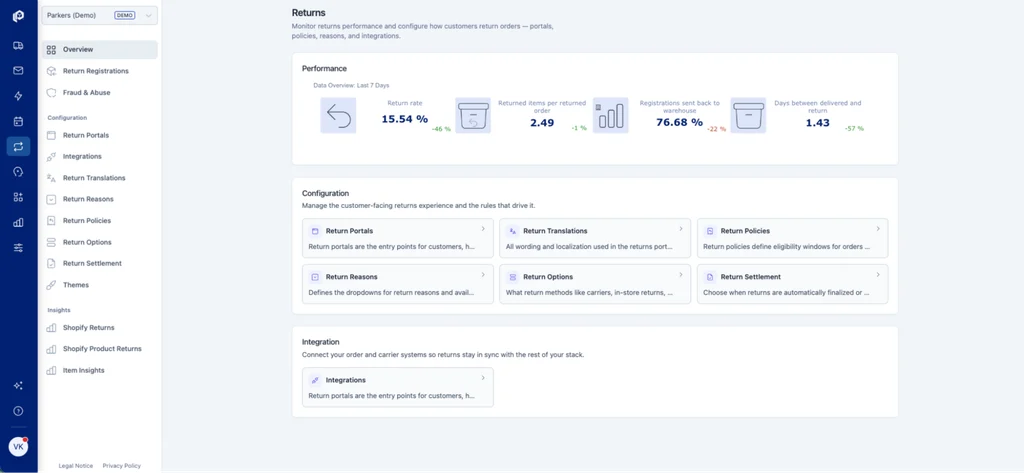
Shoppers choose a refund, store credit or an exchange for another size or color, which helps you keep revenue from returns. Staff accept returns in stores and warehouses with a scanning app and return data reaches your warehouse or order system by API, webhook or file.
parcelLab’s Fraud & Abuse Protection uses order history, return behavior, claims activity and connected fraud signals to assess risk. You can use these scores to adjust return eligibility, return windows, refund timing and compensation options. For example, trusted customers might receive instant refunds, while high-risk orders require additional verification, store credit instead of a cash refund or manual review. The platform also supports risk-based claims management, including self-service claims for missing parcels.
Narvar’s returns product (Shield) enforces eligibility rules, offers exchanges and gift cards and uses risk signals to block high-risk returns, add verification steps or delay refunds. Its drop-off network lets US shoppers return items without a box or label, then consolidates shipments to cut freight costs. A separate product (Assist) checks “item not received” claims against delivery data and sends shoppers to a branded self-service claims portal.
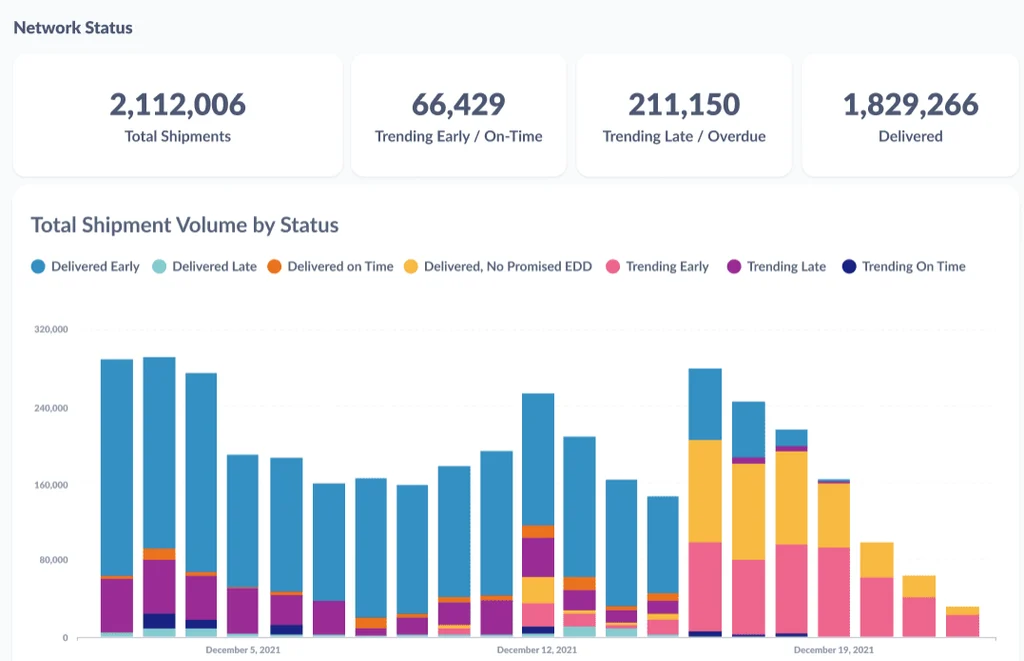
parcelLab reports delivery performance, carrier exceptions, message engagement and return reasons in one place, with industry benchmarks for carrier and email performance. You can also build custom dashboards, analyze returns by SKU and get automated report summaries with recommendations.
AI supports every stage of parcelLab, from the product page to the returns warehouse:
Narvar’s AI engine (IRIS) learns from consumer interactions across its retailer network and drives fraud decisions, delay predictions and personalization. Its agent, NAVI, resolves delivery, return and exchange issues within your policies, on your site, in your app and inside third-party AI assistants.
Both platforms connect to major commerce, messaging and customer service tools, including Shopify, Magento, Klaviyo, Zendesk, Gorgias and Salesforce. parcelLab adds ready-made apps for Shopware, Postscript, Kustomer and Apple Wallet, and connects with 450+ carriers. You can send it order data by API, file transfer or a direct connection to your event bus. Narvar includes BigCommerce, Attentive, and Gladly; shows tracking data to agents inside Salesforce Service Cloud, Gladly, and Zendesk; and supports a large global carrier network.
A standard parcelLab implementation takes four to eight weeks and is led by a dedicated customer success manager, with teams in the US and Europe. Narvar scopes each implementation per project and supports customers through account managers and an online knowledge center.
Both platforms handle standard post-purchase flows. The right choice depends on where your operation is most complex.
parcelLab fits best when:
The trade-off: detailed rules take time to define, and customers note a learning curve on advanced setups and pricing at the higher end of the market.
Narvar fits best when:
Narvar customers often praise the shopper experience it creates.
You don’t need to move everything at once. Start with the post-purchase operations that cost you the most time and money. The migration usually takes five steps:
Book a demo to see how to keep shoppers on your site, recover revenue from returns and stop return abuse before it reaches your margin.
Both cover delivery dates, tracking, notifications and returns. parcelLab gives you finer control over return rules, risk thresholds and multi-market messaging on your own site. Narvar adds a US drop-off network, shipping protection and a delivery-claims product.
Yes, for tracking pages, delivery notifications, delivery-date predictions, returns, exchanges and risk-based return rules. Narvar’s drop-off network and shipping protection have no direct parcelLab equivalent, so you’d need another provider for those.
Both platforms support risk scoring, fraud controls and risk-based return policies. parcelLab lets you adjust eligibility, return windows, refund timing, compensation options and approval workflows based on order risk. It also supports missing-parcel claims, keep-it offers and warranty returns. Narvar provides risk-based returns through Shield and delivery-claim management through its separate Assist product.
A standard parcelLab implementation takes four to eight weeks. Projects with many brands, markets or custom integrations take longer, and open returns and in-transit orders need a plan before going live.
Pricing is custom for both. parcelLab pricing depends on the modules you choose (delivery dates, tracking and messaging, returns), your shipment volume and your number of users.
By submitting the form, you agree to receive marketing information according to our Privacy Policy. You can unsubscribe at any time.
Turn post-purchase into profit
By submitting the form, you agree to receive marketing information according to our Privacy Policy. You can unsubscribe at any time.
Before you go
Subscribe to the newsletter for delivery trends, customer experience insights, and product updates.


