


What is a self-service return? Why should retailers care?

According to NRF’s Retail Returns Landscape report, a whopping $849.9 billion worth of merchandise was returned in 2025. It is no surprise that this number continues to increase year after year, especially with inflation and tariffs.
On top of the increasing return costs, retailers also deal with expensive customer acquisition costs. This is why it is more important than ever to keep the customers you already have. And if you do get a new customer, your post-purchase journey should be top-notch. Otherwise, you risk losing the shopper you worked so hard to gain.
Recently, retailers have been focusing more on their returns journeys. But what does that actually mean, and what’s been effective?
While there are plenty of ways to reduce your return rate, an effortless self-service returns process is one solution that has been deemed very useful for retailers looking to decrease costs and improve the customer experience.
What are self-service returns?
A self-service return refers to a process where shoppers conveniently return items using a returns portal on a retailer’s website. This interactive experience lets customers easily choose items from their order to return or exchange, share why and how they want to return them, and then print labels or receive QR codes to complete the process. Simple! And all without having to contact customer service for help.
Customers then package their return for pick-up or drop-off to a designated carrier or location. With digital QR codes, you don’t even require a box or for the customer to print a label. Can’t get more convenient than that!
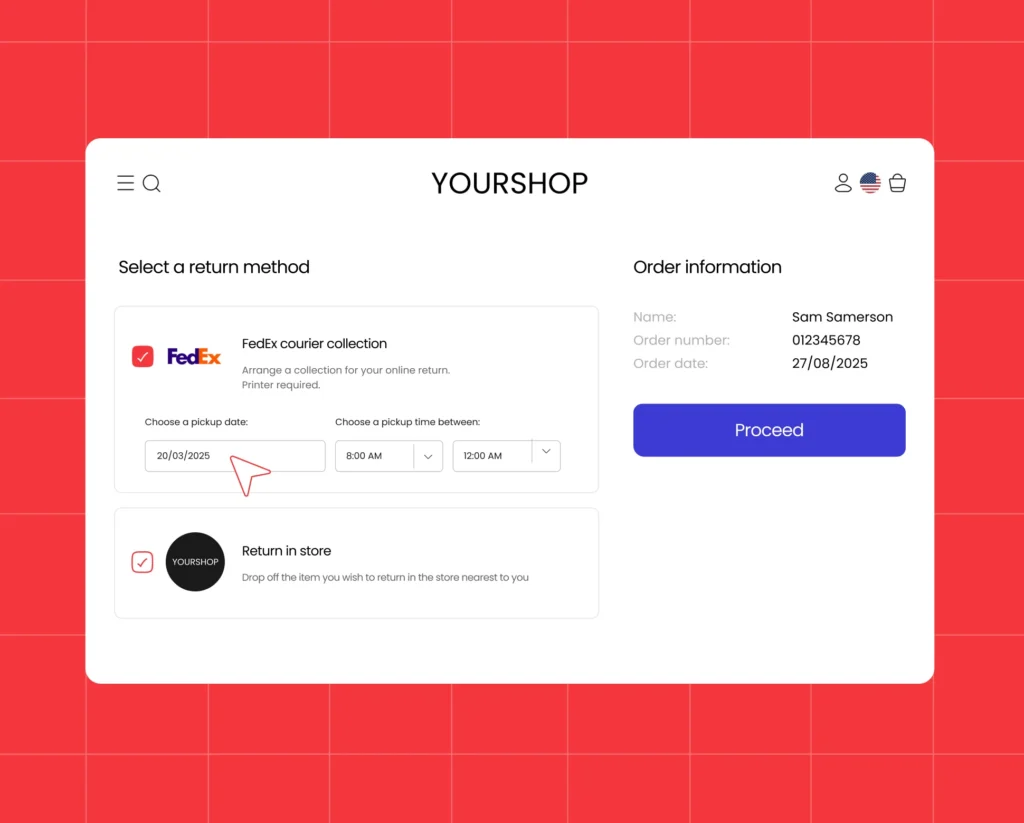
Included in the self-service returns are components such as refund options, step-by-step instructions on how to return the package, and a status overview for tracking the returns status in the customer’s account. Some retailers also offer the option of dropping off the goods at their physical store or having the logistics provider pick it up at home.
All with the aim of creating an effortless returns process that is as simple and stress-free as possible.
The self-service return approach can also handle more complex return processes like damage claims, warranty repairs, or replacements. Retailers can prompt shoppers to supply additional details and photos, so they can approve and process claims faster. This allows retailers to deliver a better customer experience while saving on customer service costs. Smooth!
Why should retailers care about self-service returns?
71% of shoppers say that if they have a poor returns experience, they are less likely to shop with that retailer again. That means if you aren’t currently working on improving your return experience, this is your sign to do so!
parcelLab data has found that retailers who leverage a returns portal see 3x more repeat purchases. In addition to this, self-service returns hold a lot of advantages for retailers. Let’s dive into some benefits below.
1. More efficient warehouse operations
With a paper-based process, retailers only know what has been returned once the package is received and processed at the warehouse. With a digital self-service returns process, retailers get more data faster. They know exactly which items in an order have been selected for return and why. While the items will still need to be inspected, it helps retailers plan and staff based on each day’s expected returns volume. They can also determine which items can be restocked and which may need to be disposed of or recycled earlier.
2. Improved data collection and inventory management
Having more immediate information allows eCommerce teams to analyze the reasons why items are being returned. They can then use that knowledge to make changes and reduce the likelihood of future returns. For example, they may update sizing and fit recommendations in clothing descriptions or update photos if colors are not represented as customers expect.
Product teams can also use returns data to improve future product iterations. If a customer complains that a feature is too difficult to use, then the team can work on making it better.
3. Revenue protection and faster re-purchases
Self-service returns empower retailers to recapture revenue that otherwise would be lost by offering exchanges, store credit, or gift cards in place of refunds. If a customer selects the return reason as “wrong size,” the return portal can show what other sizes are available for that item so your customer can do an exchange. Or, perhaps the customer didn’t like the color they received, so they can be shown other colors that they might like instead. This level of personalization is a game-changer for recovering revenue.
In the case of a customer who prefers to just submit the return, a return portal can promote relevant products and promotions. This way, shoppers can also be enticed to make repeat purchases sooner.
4. Elevated customer experience and loyalty
Since most return portals are flexible, brands can customize it based on their return policy and segmentation rules. For example, you may offer a first-time customer an incentive for store credit with a refund. So, they return to shop with your brand again. For a loyal customer, you may offer an instant refund since you know they will take the proper steps to return their item.
The returns experience is an important part of the customer journey
Making returns more convenient through self-service initiatives is a key area of opportunity. With more data, retailers can be more in tune with customer needs, create engaging and personalized returns experiences, and provide proactive customer support. It’s a win-win for eCommerce retailers and shoppers alike.
Liked this Post? View more related posts below


